While antiques hold many charms, “Kutani ware” stands out for its particularly vivid colors and bold designs that captivate people. It is a general term for colored porcelain produced in southern Ishikawa Prefecture (including Kaga, Komatsu, and Nomi), and with its long history, it continues to fascinate many antique enthusiasts. In this article, we will provide an easy-to-understand explanation for beginners on Kutani ware—one of Japan’s most representative types of porcelain—covering everything from its history to its various styles, shapes, and types (uses). Let’s explore the magnificent world of Kutani ware, born of Kaga culture, which stands apart from Imari ware, often considered the quintessential porcelain.
The History of Kutani Ware: From the Elusive Ancient Kutani to the Revival of a Blossoming Diversity, and Onward to the Present Day
The history of Kutani ware can be broadly divided into two periods.
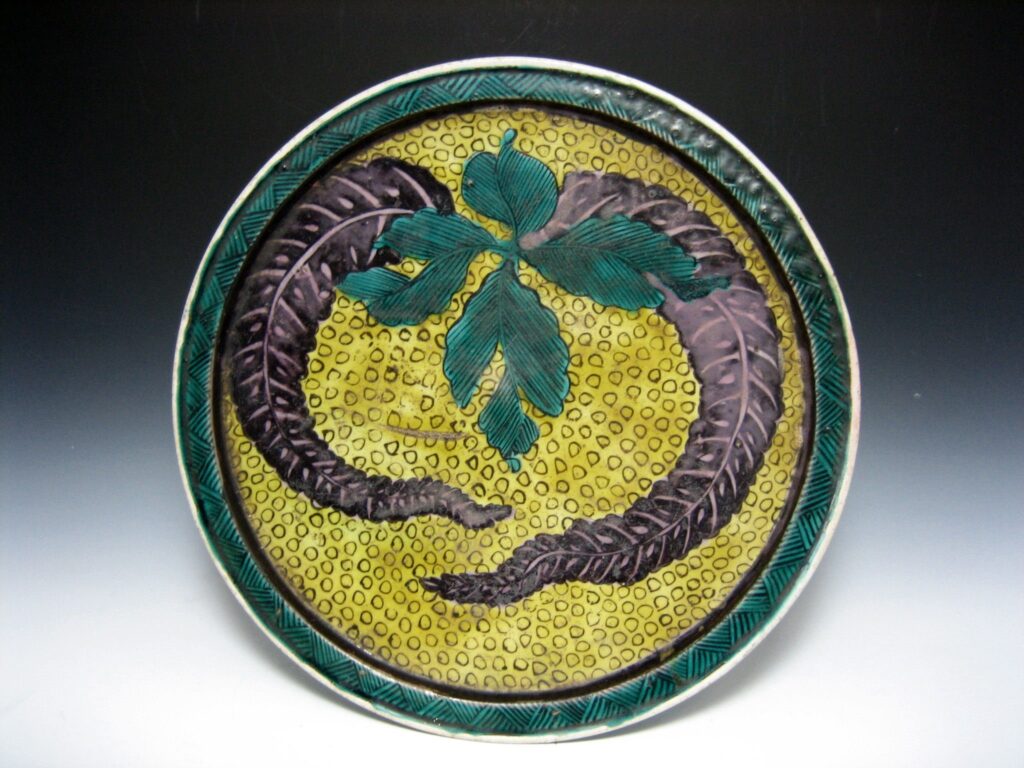
- Kokutani: It is believed to have originated in the Meireki era (around 1655) during the early Edo period, when the Daishōji Domain—a branch domain of the Kaga Domain—began producing porcelain in the village of Kutani (present-day Kutani-chō, Yamanaka Onsen, Kaga City) within its territory. Backed by the immense wealth of the Kaga Domain (known as the “Million-Koku Kaga”), and reportedly under the guidance of Kusumi Morikage, a master painter of the Kano school, this style is characterized by a bold, powerful, and painterly aesthetic that employs the “Kutani Gosa” palette of green, yellow, purple, ultramarine, and red. However, production of this early Kutani porcelain abruptly ceased after only about 50 years. Various theories exist regarding the reason for this, and it remains shrouded in mystery. Due to its short production period, very few examples of Old Kutani survive today, making them extremely valuable as antiques.
- The Revival of Kutani: Approximately 100 years after the decline of Old Kutani, during the late Edo period—specifically the Bunsei era (around 1807)—Kutani ware entered a period of revival thanks to the encouragement of the Kaga Domain. Starting with the Kasugayama Kiln, established after inviting the master craftsman Aoki Mokubei from Kyoto, many other kilns—including the Wakasugi Kiln, the Yoshidaya Kiln, the Miyamotoya Kiln (Iidaya Hachiroemon), and the Eiraku Kiln—sprang up one after another, each developing its own distinctive style.
- Kasugayama Kiln: Under the guidance of Aoki Mokbei, the kiln produced Chinese-style red-painted and underglaze blue-and-white ware (Mokbei style).
- Wakasugi Kiln: It was established as part of the domain’s industrial development initiative.
- Yoshidaya Kiln: Aiming to revive the “Aote” style of Old Kutani (a style characterized primarily by green, yellow, purple, and ultramarine blue), this kiln is known for its rich, deep colors that seem to completely cover the entire surface of the piece.
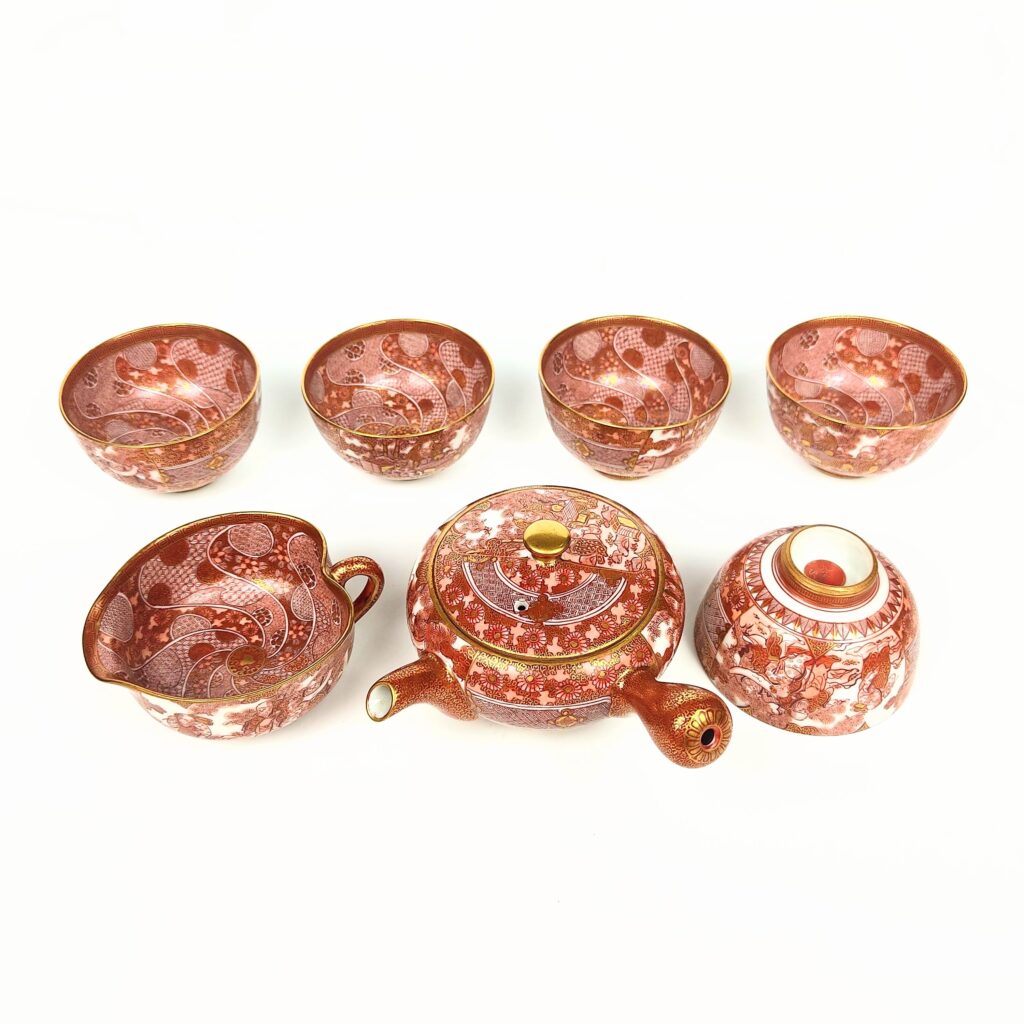
- Iidaya Kiln (Miyamoto-ya Kiln): Known for a style called “Akae Saibyo,” in which figures and other subjects are rendered using extremely fine red lines (Hachiro-de).
- Eiraku Kiln: Eiraku Wazen, a master craftsman of Kyoto ware, was invited to the kiln, where he perfected the luxurious “Kinrande” style, featuring gold decoration on a red background. Works from this era of the revival of Kutani ware saw a flourishing of diverse styles, and many examples can be found on the antique market.
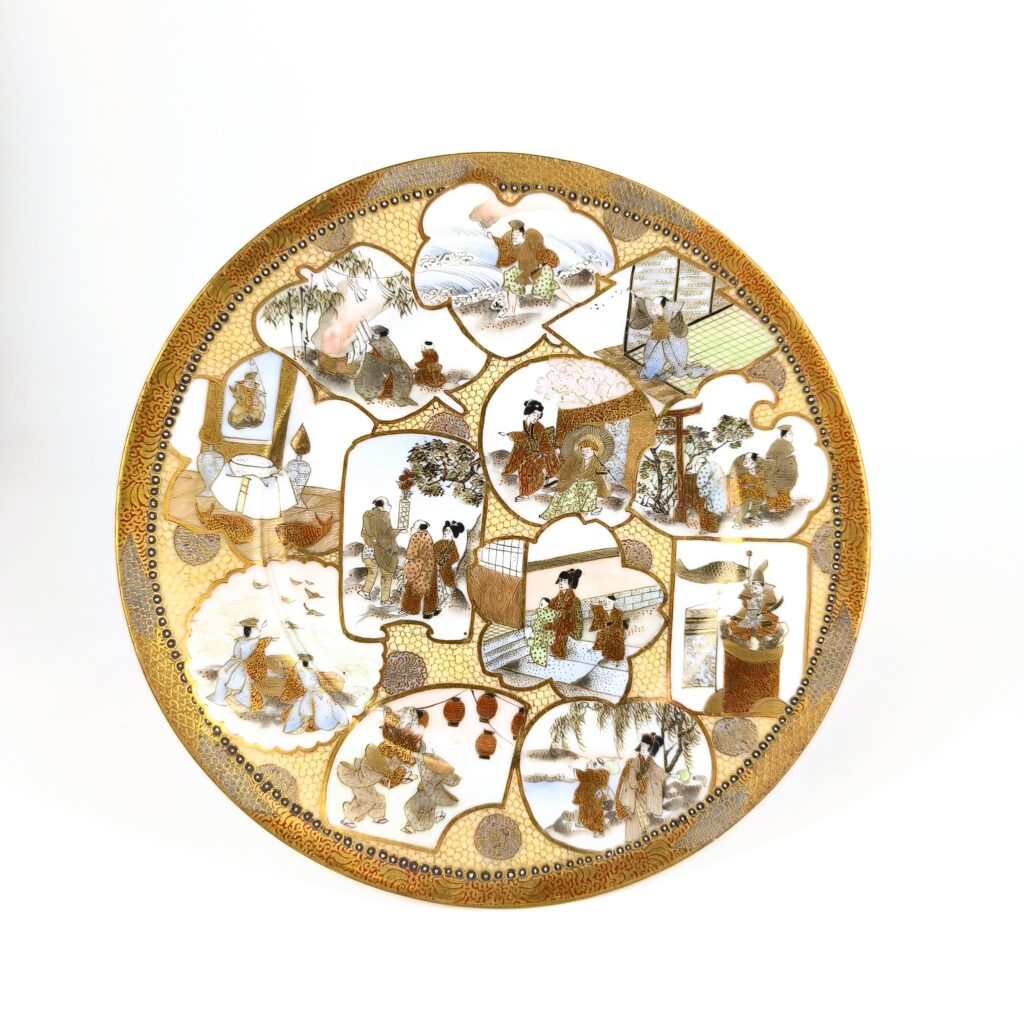
- Post-Meiji Era: With the onset of the Meiji era, Kutani Shōzō established the “Colorful Kinrande” style, which synthesized various existing techniques while incorporating Western pigments. This vibrant style was highly acclaimed overseas as “Japan Kutani” and developed into a thriving export industry. Around this time, the division of labor across production stages—such as body preparation and painting—also advanced.
- Today: While modern Kutani ware preserves traditional techniques and styles, artists are pursuing new forms of expression through creative freedom, resulting in a diverse range of works.
The Diverse Styles (Characteristics) of Kutani Ware
The greatest appeal of Kutani ware lies in its vivid and beautiful overglaze decoration. While the basic colors are the five traditional Japanese pigments known as “Kutani Gosaï”—green, yellow, purple, ultramarine, and red—the specific expressions vary depending on the era, kiln, and style. Understanding these styles is also essential for identifying antique Kutani ware.
- Old Kutani Style: Characterized by bold use of five colors and depictions featuring strong lines and compositions. It is distinguished by its painterly expression that makes effective use of negative space. There is also a variant known as “Aote Kutani,” which features rich, deep colors dominated by green, yellow, purple, and ultramarine.
- Mokubei Style (Kasugayama Kiln): Characterized by red-painted ware, typically featuring a red glaze over the entire piece with Chinese-style depictions of figures and other motifs.
- Yoshidaya Style (Yoshidaya Kiln): Revived the Aote-Kutani style. Characterized by rich, bold coloring that covers the entire vessel with patterns, using four colors: green, yellow, purple, and ultramarine. As a general rule, red is not used.
- Iidaya Style (Hachiro-de) (Miyamoto-ya Kiln): Fine red-painted decoration. This technique involves meticulously rendering figures, landscapes, and karako motifs using extremely fine red lines. The designs are sometimes outlined in gold.
- Eiraku Style (Eiraku Kiln): “Kinrande,” a technique in which vibrant patterns are painted in gold over a red underglaze. This was a technique in which the Eiraku Kiln specialized.
- Shōza Style (Kutani Shōza): A lavish and splendid style that blends various techniques from early Kutani to the revived Kutani period—such as red-painted, gold-lacquered, and blue-painted styles—with pigments imported from the West. It is also known as “Colorful Gold-Lacquered Ware.”
These styles reflect the era and the individuality of the artisans, giving rise to the diversity of antique Kutani ware.
Shapes and Types (Uses) of Kutani Ware
Nurtured within the vibrant culture of the Kaga Domain, which boasted a revenue of one million koku, Kutani ware has produced vessels in a wide variety of shapes and for various uses.
- Tableware:
- Plates: From large serving plates that take center stage at the dining table to medium and small plates that are convenient for individual servings, the selection is vast and varied, including round, square, and irregularly shaped plates. Antique large serving plates, in particular, often feature luxurious designs that embody the refined taste of their era.
- Bowl: A deep dish used for a variety of dishes, such as stews and salads.
- Bowls: Everyday tableware such as rice bowls, tea cups, and soba bowls are also made from Kutani ware.
- Sake ware: Tokkuri (sake bottles), sakazuki (sake cups), and sake cup washers add a touch of elegance to evening drinks and banquets.
- Tea ware: teapots, water coolers, tea bowls, etc.
- Home Decor & Accessories:
- Chinese Lions and Komainu: These are displayed as talismans to ward off evil spirits and bring good luck.
- Maneki-neko and the Seven Gods of Good Fortune: These are popular lucky charms believed to bring prosperity in business and good fortune.
- Subjects: Portraits of beautiful women, children, and more.
- Vases: They’re not just for holding flowers; they’re decorative pieces that add a touch of color to any space.
- Tea ceremony utensils:
- They also produce tea ceremony utensils such as tea bowls, water jars, and lid rests.
These pieces are highly valued not only for their practical use but also as works of art. When collecting them as antiques, this diversity is one of the joys of the hobby.
Imari Ware and Kutani Ware: Two Major Trends in Japanese Porcelain
When it comes to Japanese porcelain, Imari ware (along with Arita ware and others) is widely known. Originating in the early Edo period, Imari ware produced a diverse range of products, from blue-and-white porcelain to polychrome porcelain. It was exported in large quantities not only domestically but also overseas, leading the way in Japanese porcelain production.
On the other hand, Kutani ware is a type of porcelain with a history and cultural background distinct from Imari ware. Originating in the unique cultural sphere of the Kaga Domain, it pursued a boldness, richness, and splendor in its colored designs that differed from Imari ware. While Imari ware tends to feature a relatively thin and delicate style, Kutani ware (particularly the Old Kutani and Yoshidaya styles) is characterized by thick, substantial pieces.
Both Imari ware and Kutani ware are iconic examples of Japanese porcelain, and both have a large following in the world of antiques. By learning about the history and distinctive characteristics of each region, you can broaden your perspective when selecting antiques and gain a deeper appreciation of their charm.
The Joy of Selecting Kutani Ware as Antiques
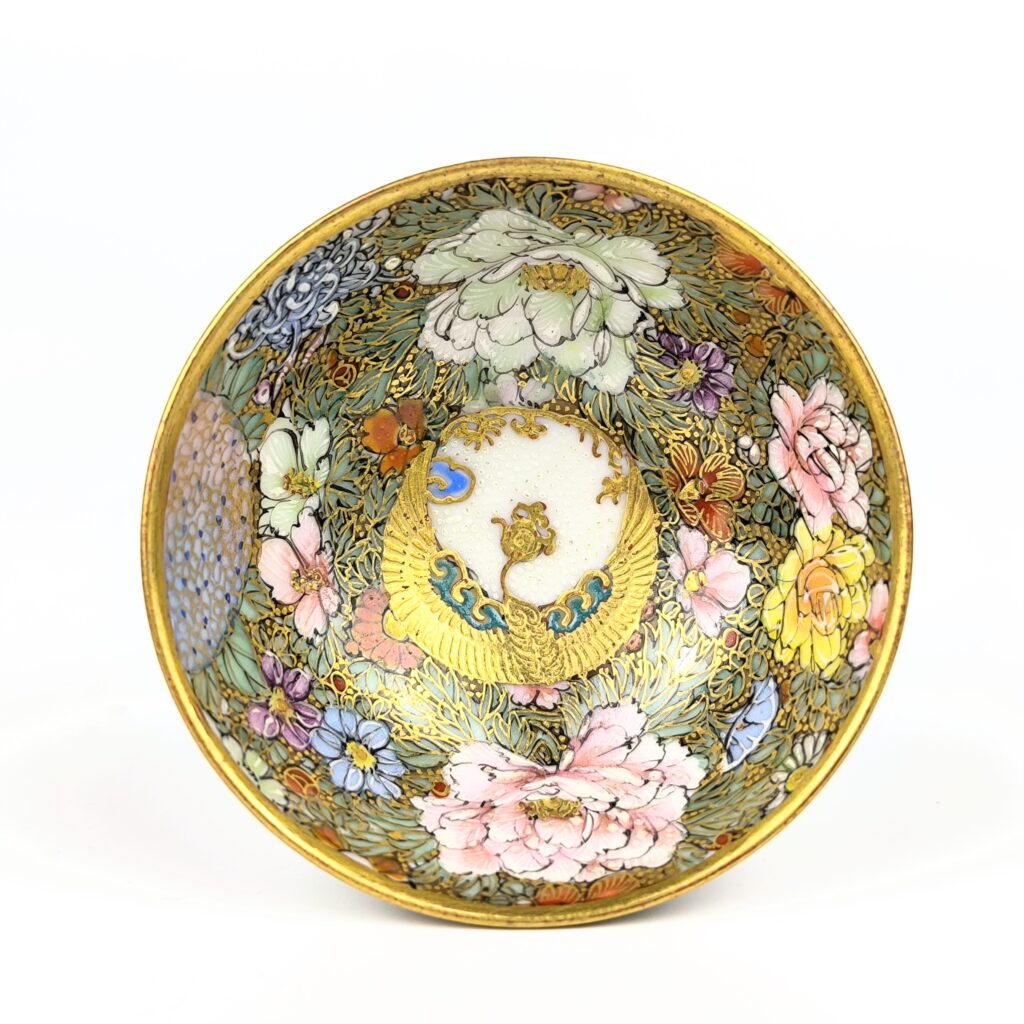
If you’re interested in colorful Kutani ware antiques, what should you look for when choosing one?
- For Beginners: First, check the “condition.” Look carefully for any cracks, chips, or hairline cracks, as well as peeling paint or signs of repair. Next, we recommend choosing a piece based on the “color scheme” or “design (style)” that appeals to you. Be sure to check the “markings” (such as the kiln mark or the artist’s name) on the back as well.
- Once you’ve gotten the hang of it: Try to identify which “period” and which “style” the piece belongs to. Even within the same style, there are subtle differences depending on the period and the artist.
- One of the greatest joys of collecting antiques is identifying “Old Kutani,” seeking out masterpieces from the various kilns of the revived Kutani tradition (such as Yoshidaya and Iidaya), or discovering works by famous artists ranging from Meiji-period figures like Kutani Shozo to contemporary Kutani ware artists.
Because Kutani ware antiques are so popular, unfortunately, there are also counterfeits and later reproductions on the market. It is important to choose a reputable antique dealer or online shop and to make your purchase only after receiving a satisfactory explanation.
Summary: Bringing the Beauty of Kaga into Your Daily Life – The World of Kutani Ware
Kutani ware is a quintessential Japanese painted porcelain that captivates us with its bold compositions, vivid colors, and diverse styles. From the once-elusive ancient Kutani, to the resurgence of Kutani with its dazzling array of designs, and on to Japan Kutani, which has captivated the world, its history has evolved hand in hand with the culture of the Kaga domain, known for its million-koku fief.
Holding a piece of antique Kutani ware in your hands is not merely about touching an old vessel; it is also about experiencing the atmosphere of that era, the passion of the artisans, and the Japanese sense of beauty. It can also be interesting to compare it with antiques from other regions, such as Imari ware.
Why not step into the vibrant world of Kutani ware? You’re sure to find a piece that will bring the splendor of Kaga to your everyday dining table and living space.