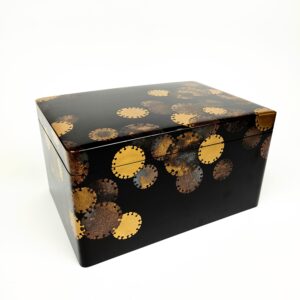
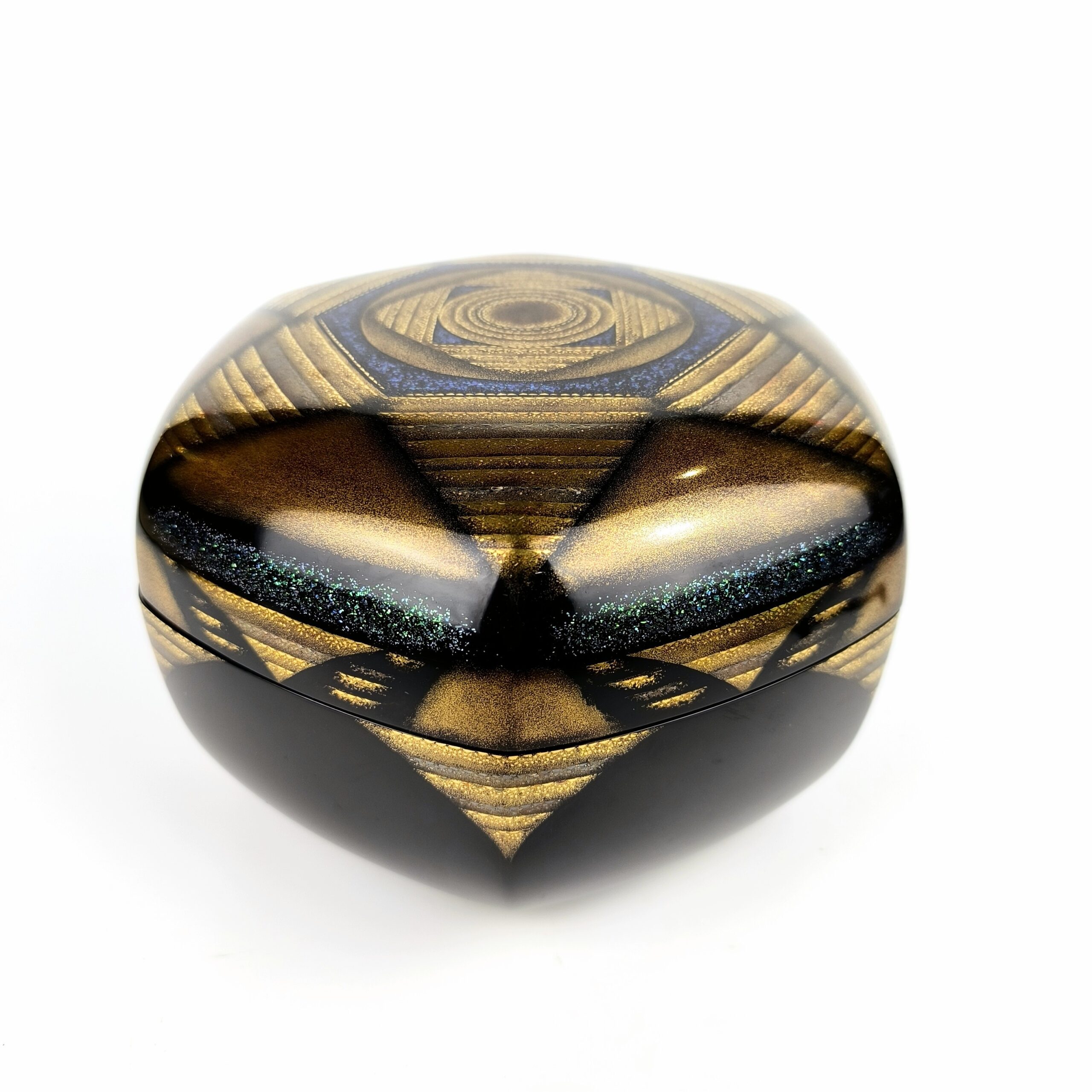
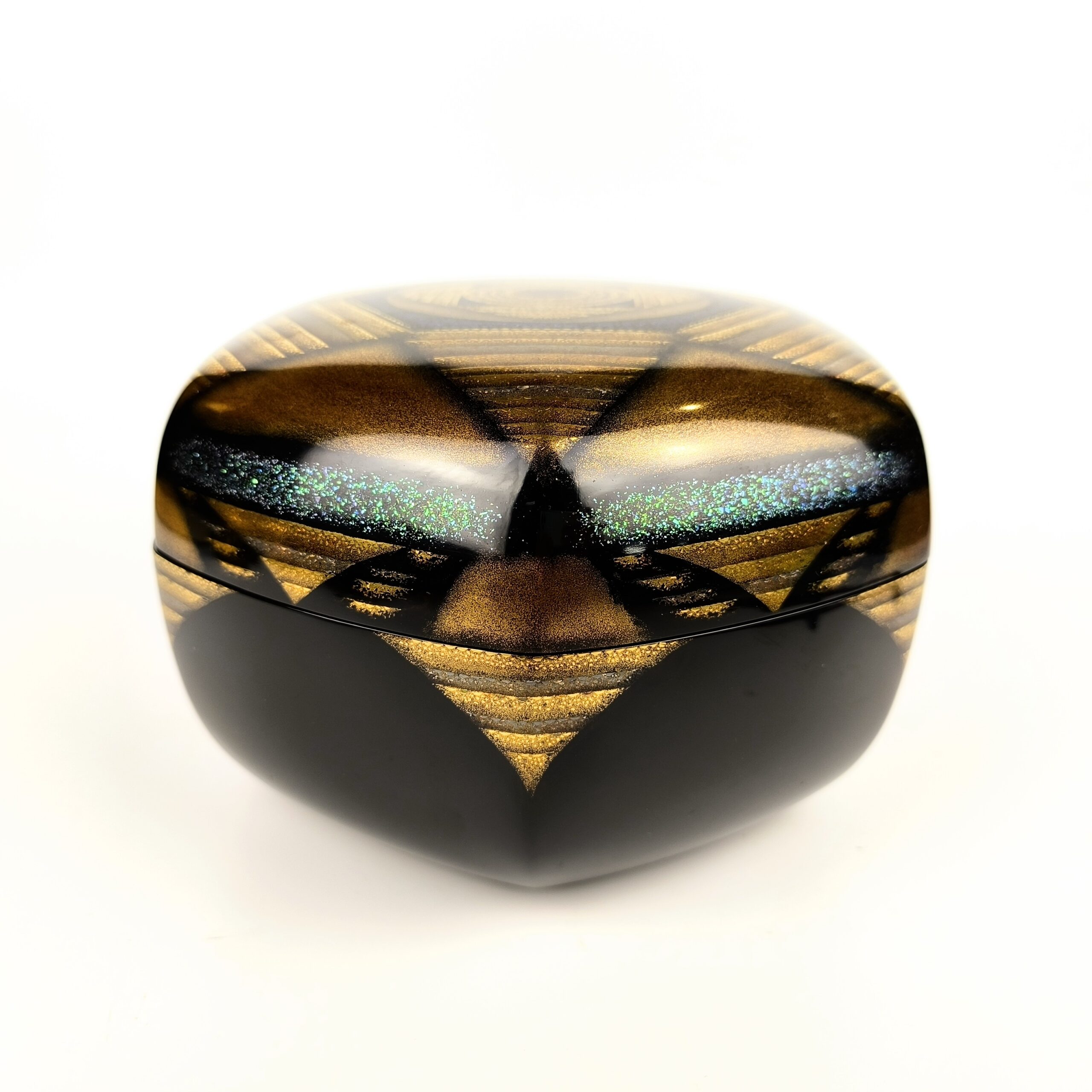
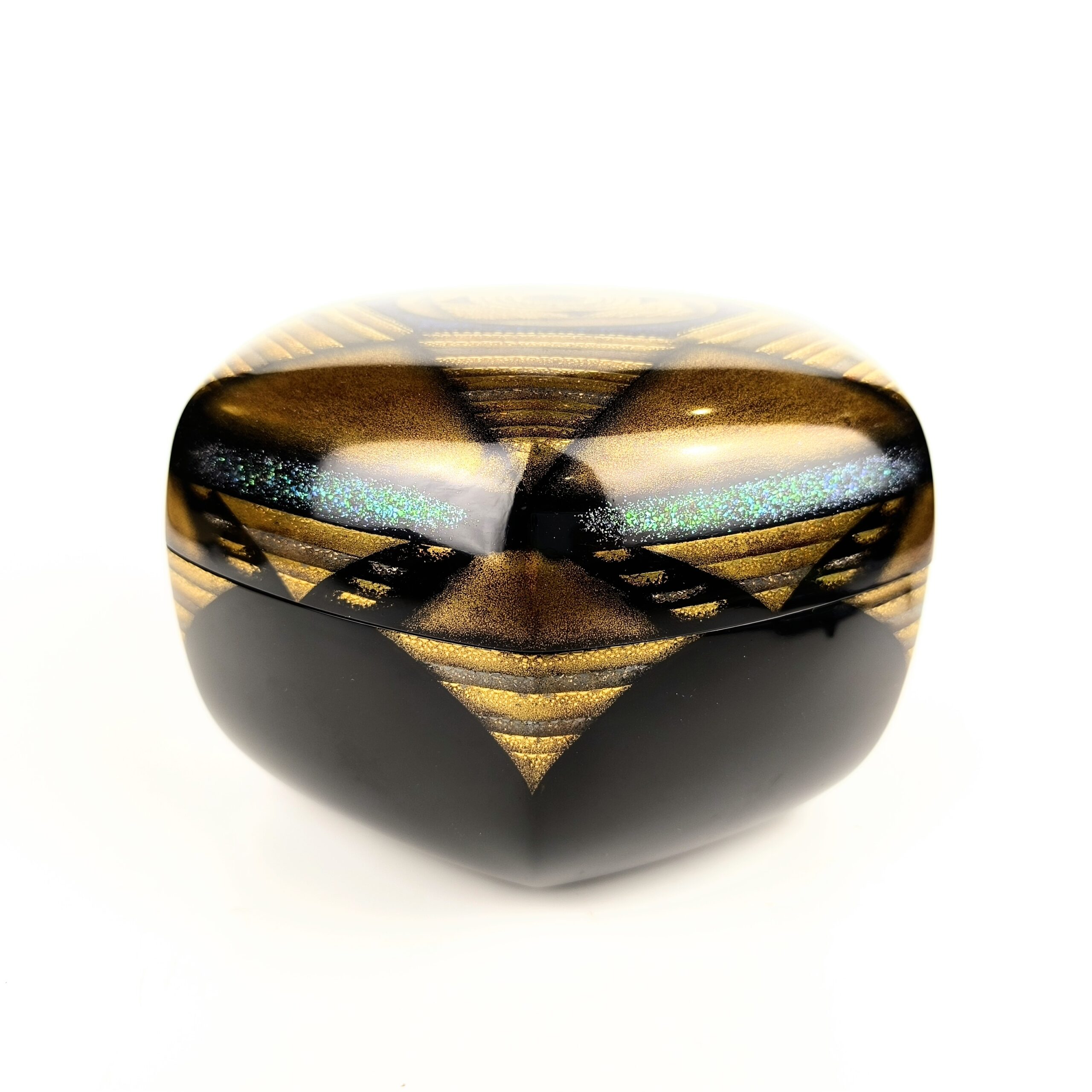
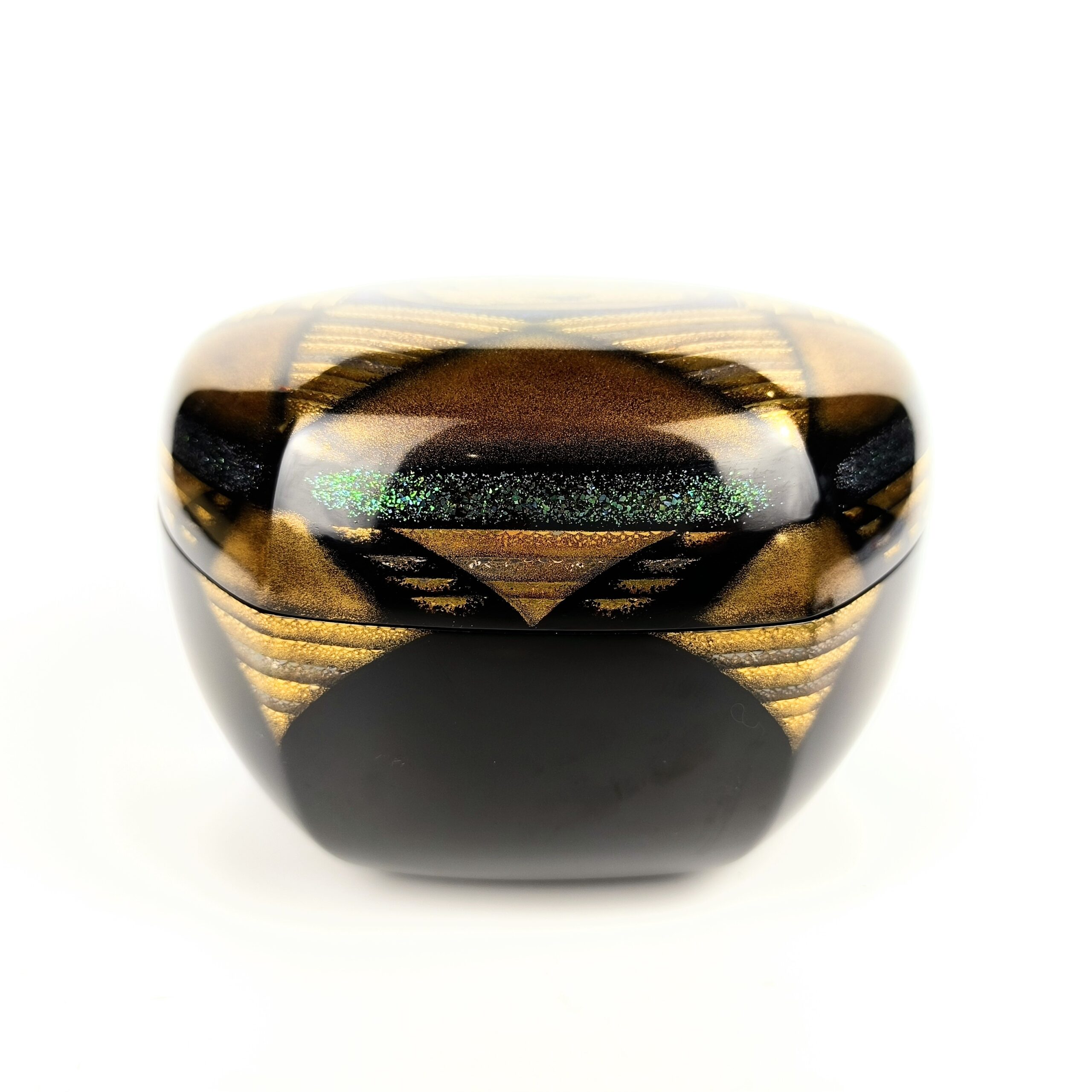
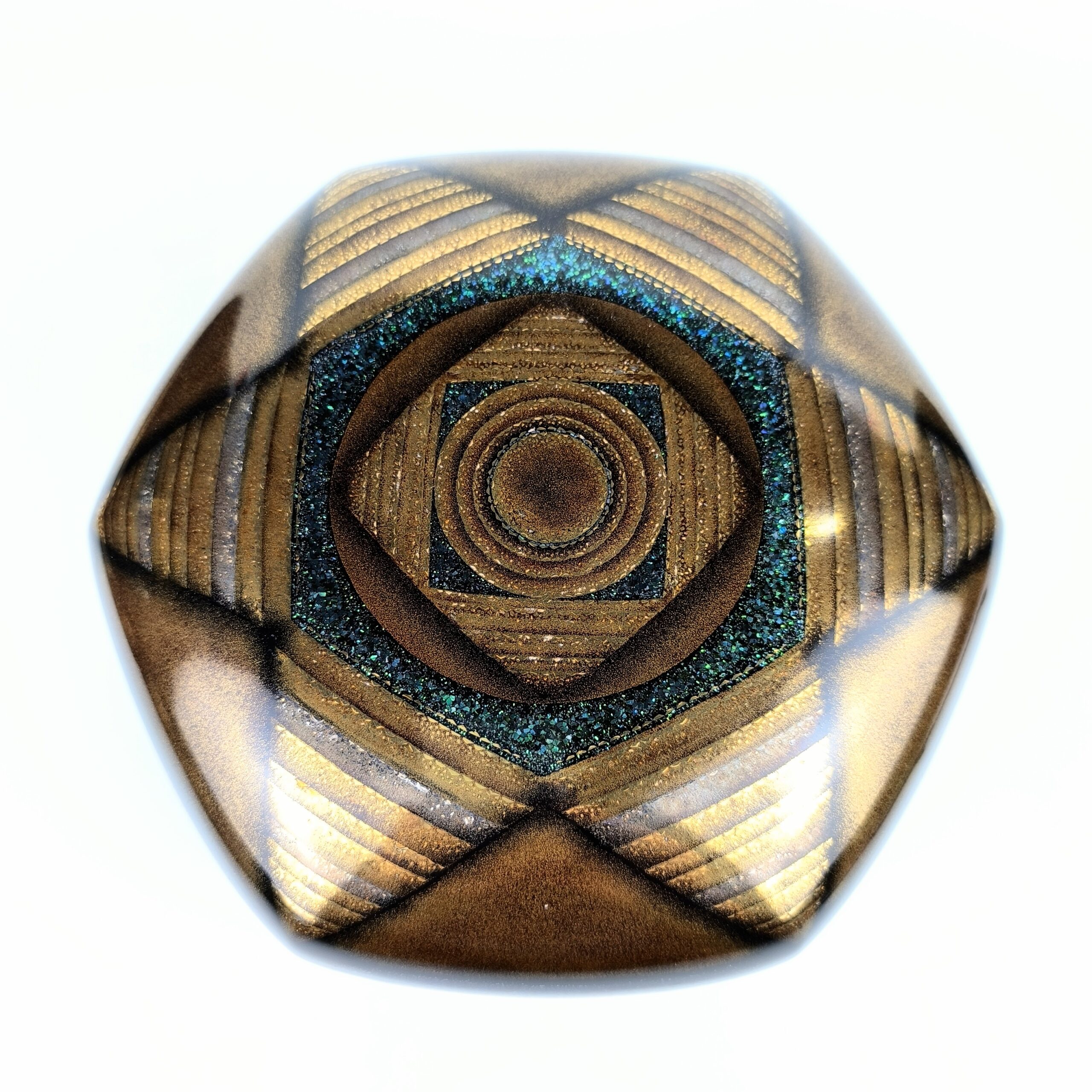
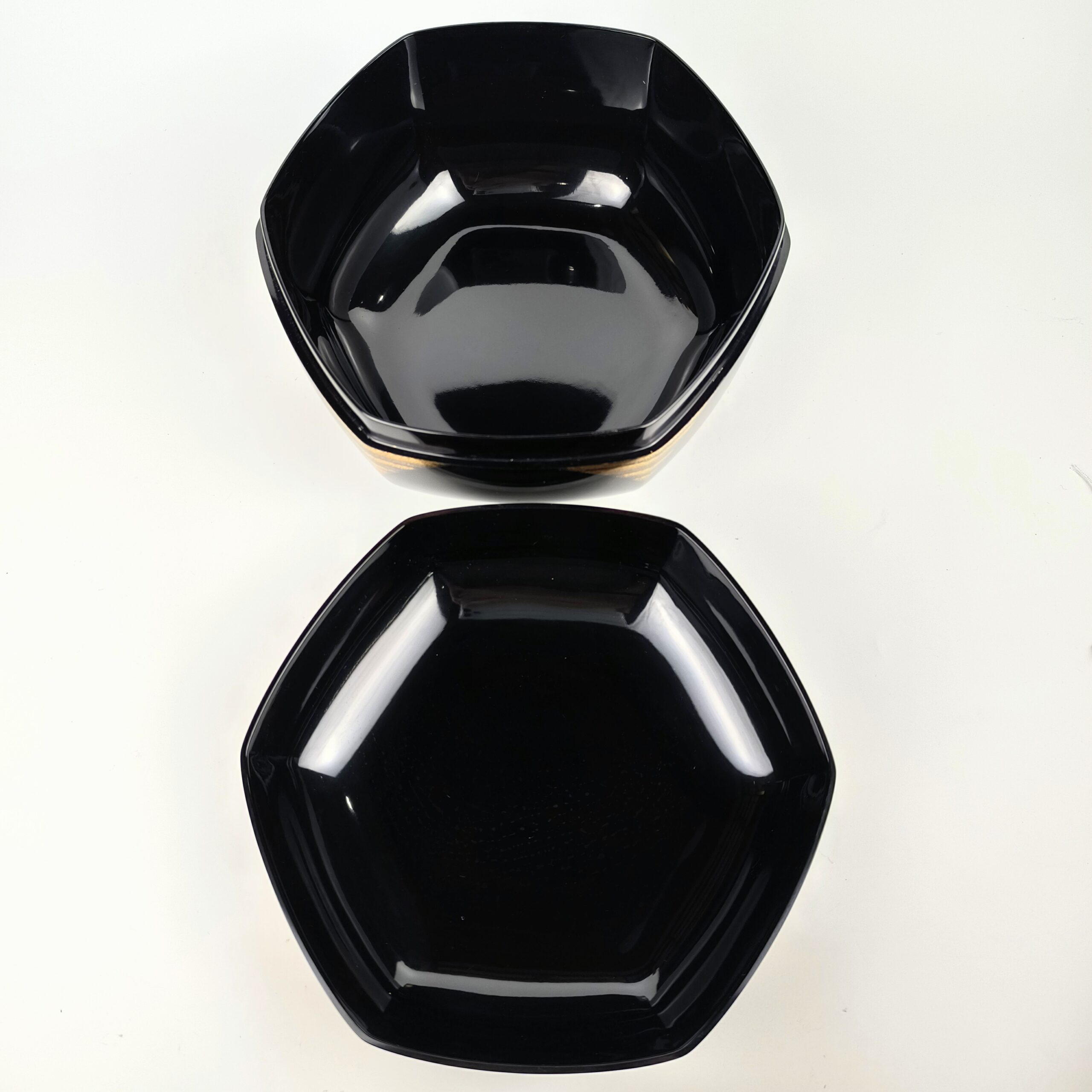
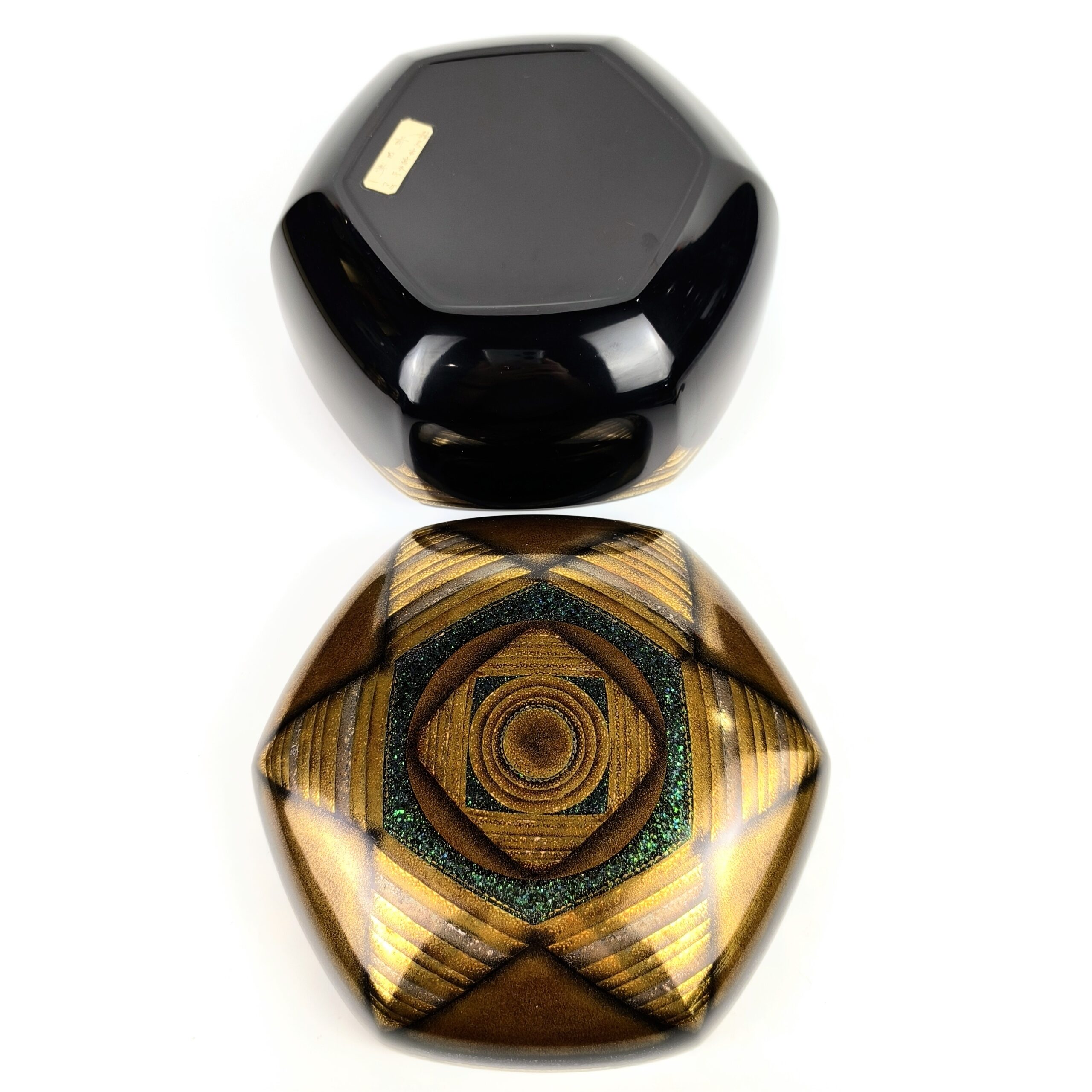
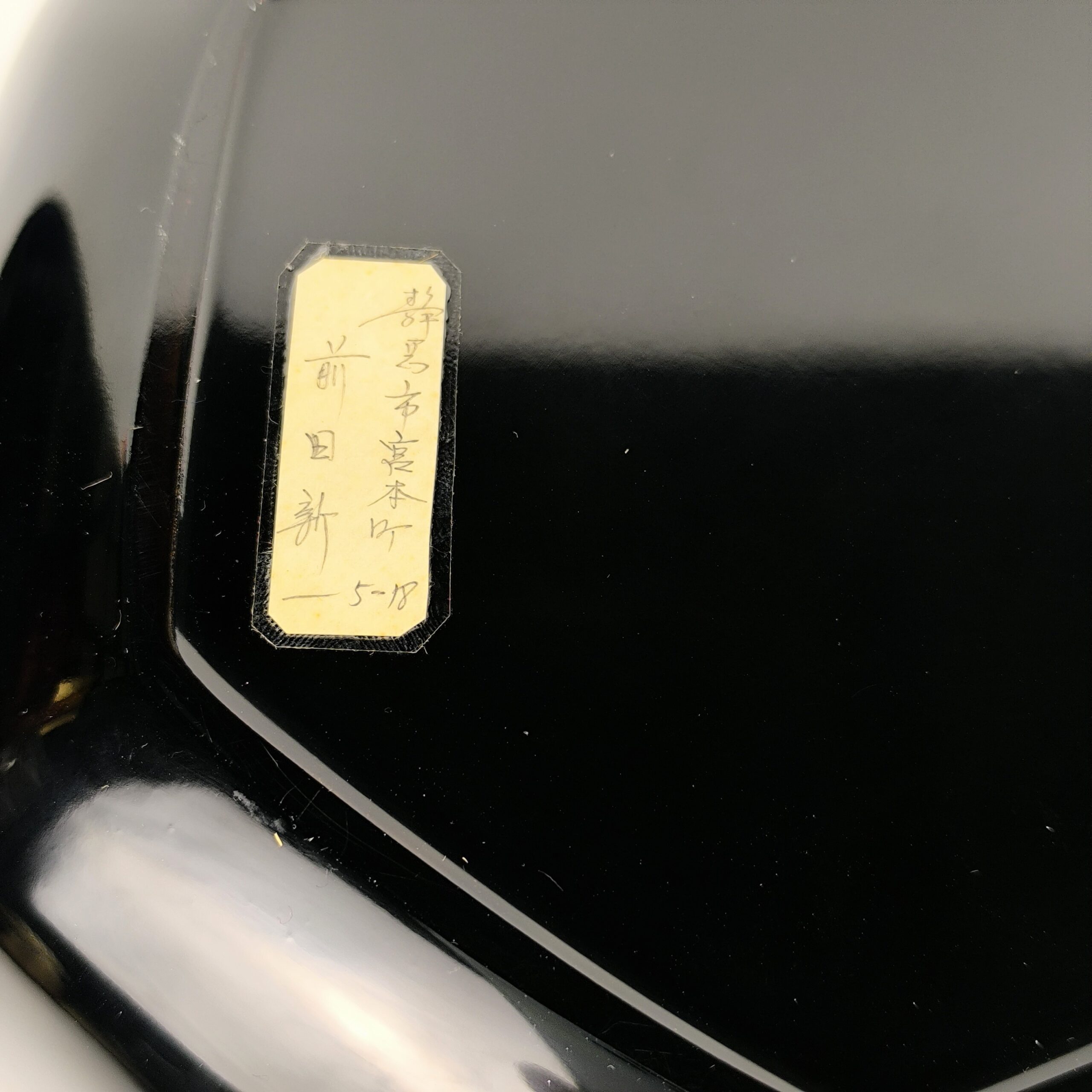
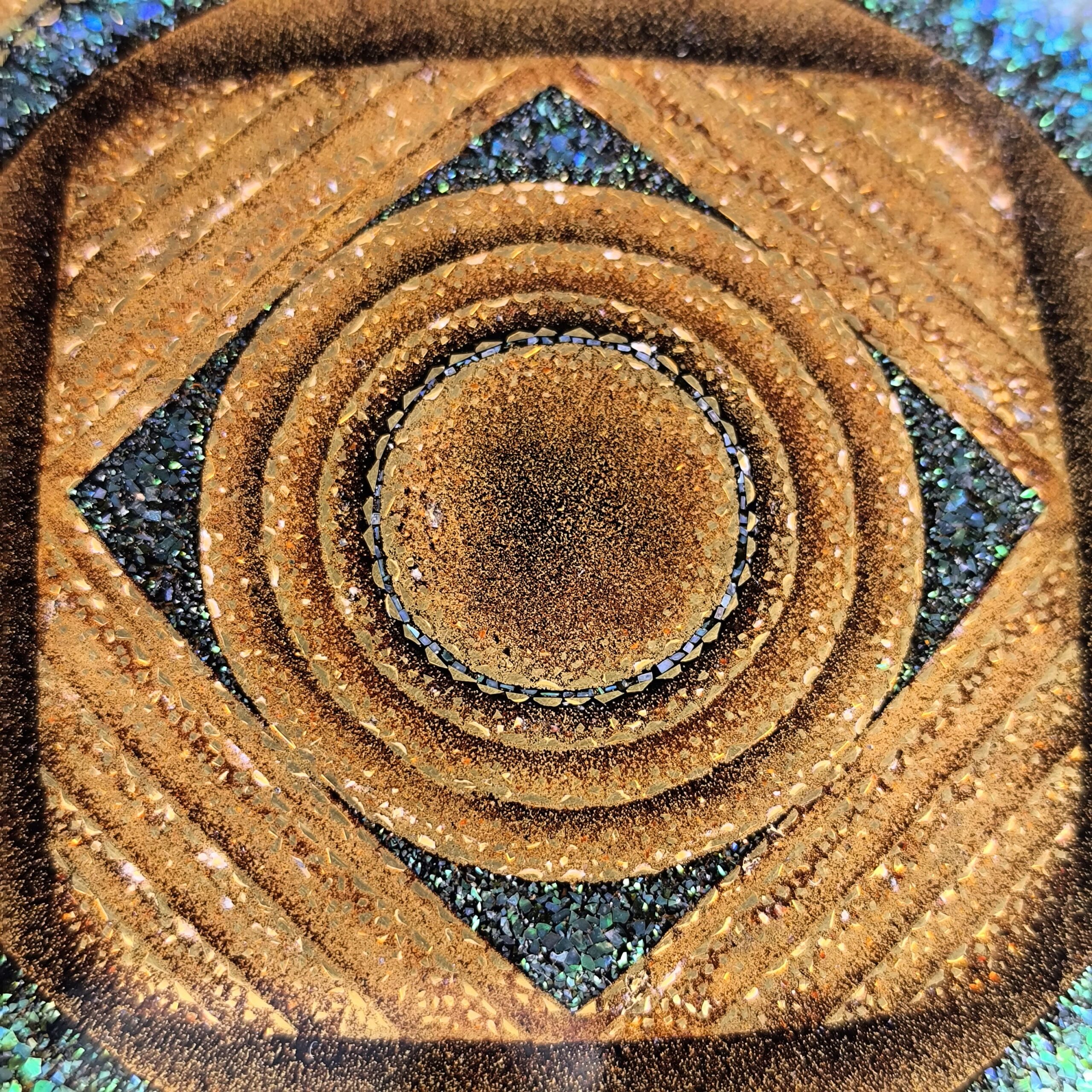
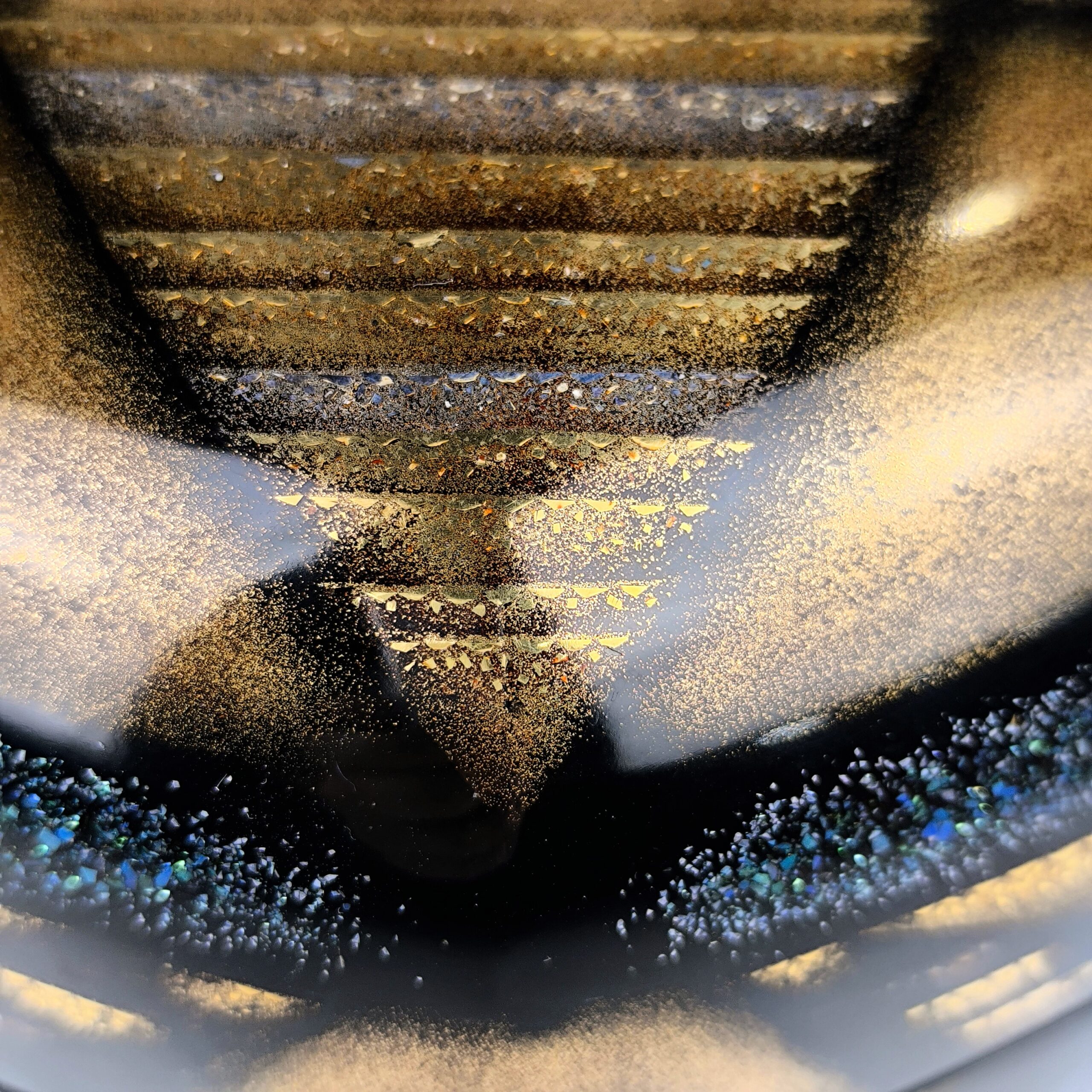
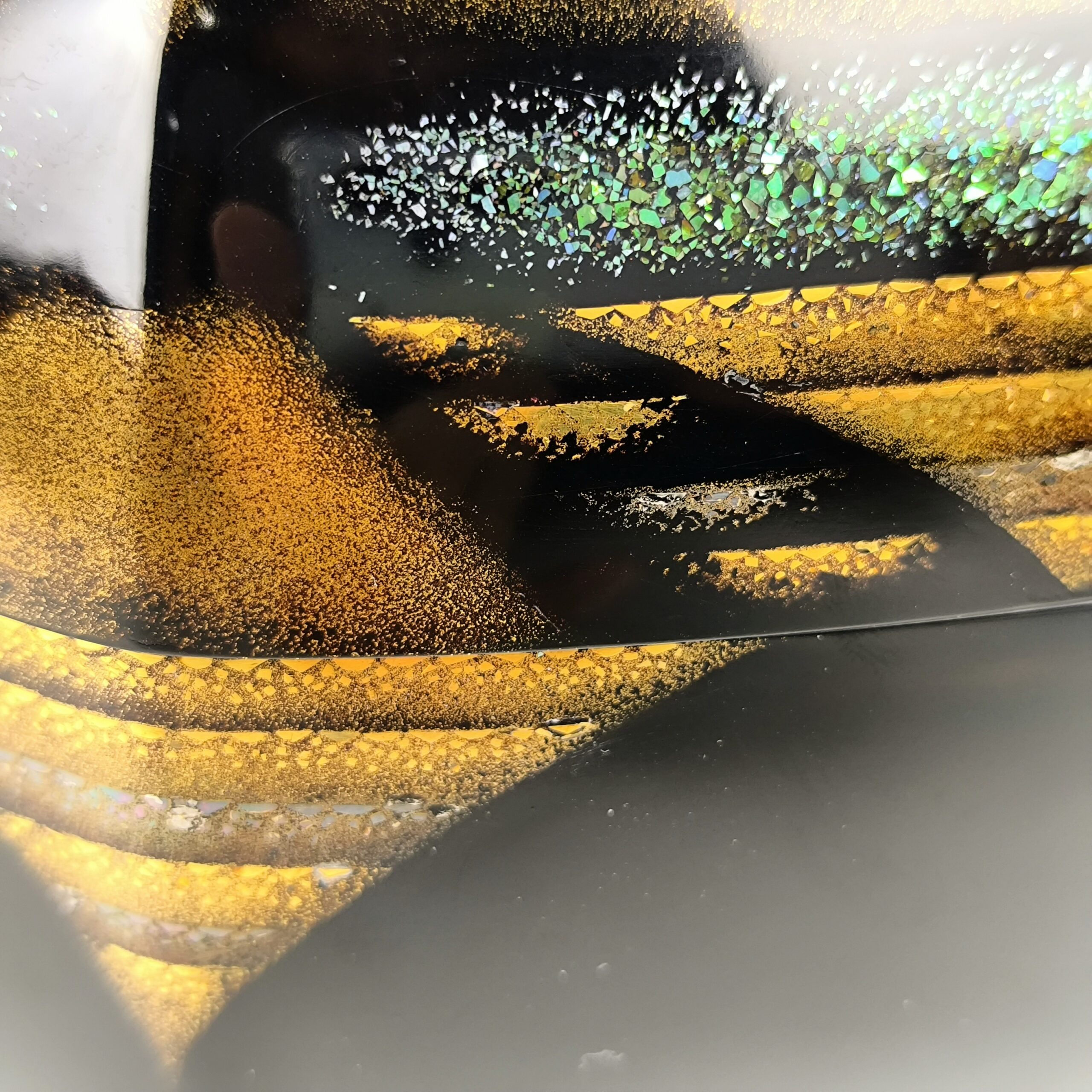
Makie is one of the representative decorative techniques in lacquerware craftsmanship. It is a traditional Japanese lacquer technique where patterns are drawn with lacquer, and before it dries, gold or silver powder (metallic powder) is “sprinkled” onto the surface to fix it, creating a brilliant decoration. It is called “makie” because it involves sprinkling powder to create designs, and its characteristic feature is the beautiful finish where gold and silver appear to float on the jet-black lacquered surface.
Raden (螺鈿) is a traditional Japanese lacquer craft technique where thin layers of the nacreous layer found inside shells such as abalone, night pearl shell, and white butterfly shell are processed. These layers are then inlaid or applied onto the surface of lacquerware to create patterns with a gem-like luster and color. Introduced from China during the Nara period, it developed uniquely in Japan from the Heian period onward. Combined with maki-e, it enabled more complex expressions.
Kanshitsu is a traditional Japanese technique where lacquer and hemp cloth are layered and molded. Hemp cloth is applied to a mold to form the base. After drying, the mold is removed, creating lightweight yet durable Buddhist statues and vessels. It flourished as a Buddhist statue modeling technique during the Nara period. There are two types: hollow dry lacquer (removing the internal mold) and wooden-core dry lacquer (leaving a wooden core). It is an excellent technique with a history of use in Shosoin Buddhist statues and the Ashura statue.
Unconstrained by wooden forms, it uses clay or plaster molds (prototypes), enabling complex and free-form designs. Once the lacquer dries and hardens, it bonds with the hemp cloth, creating a structure lighter than wood carving while combining strength and flexibility. The layers of lacquer impart a unique luster and depth to the surface, developing a richer patina over time.