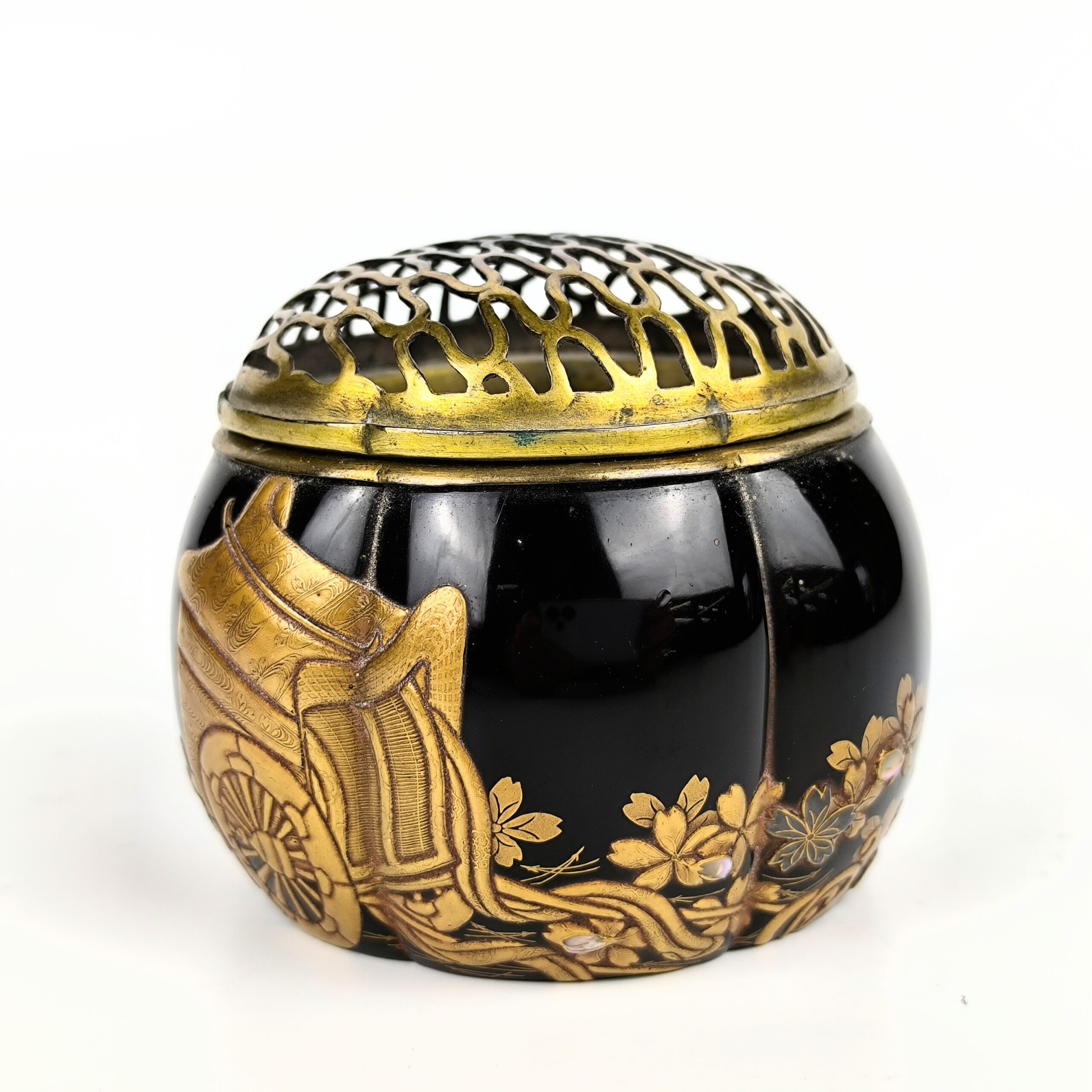
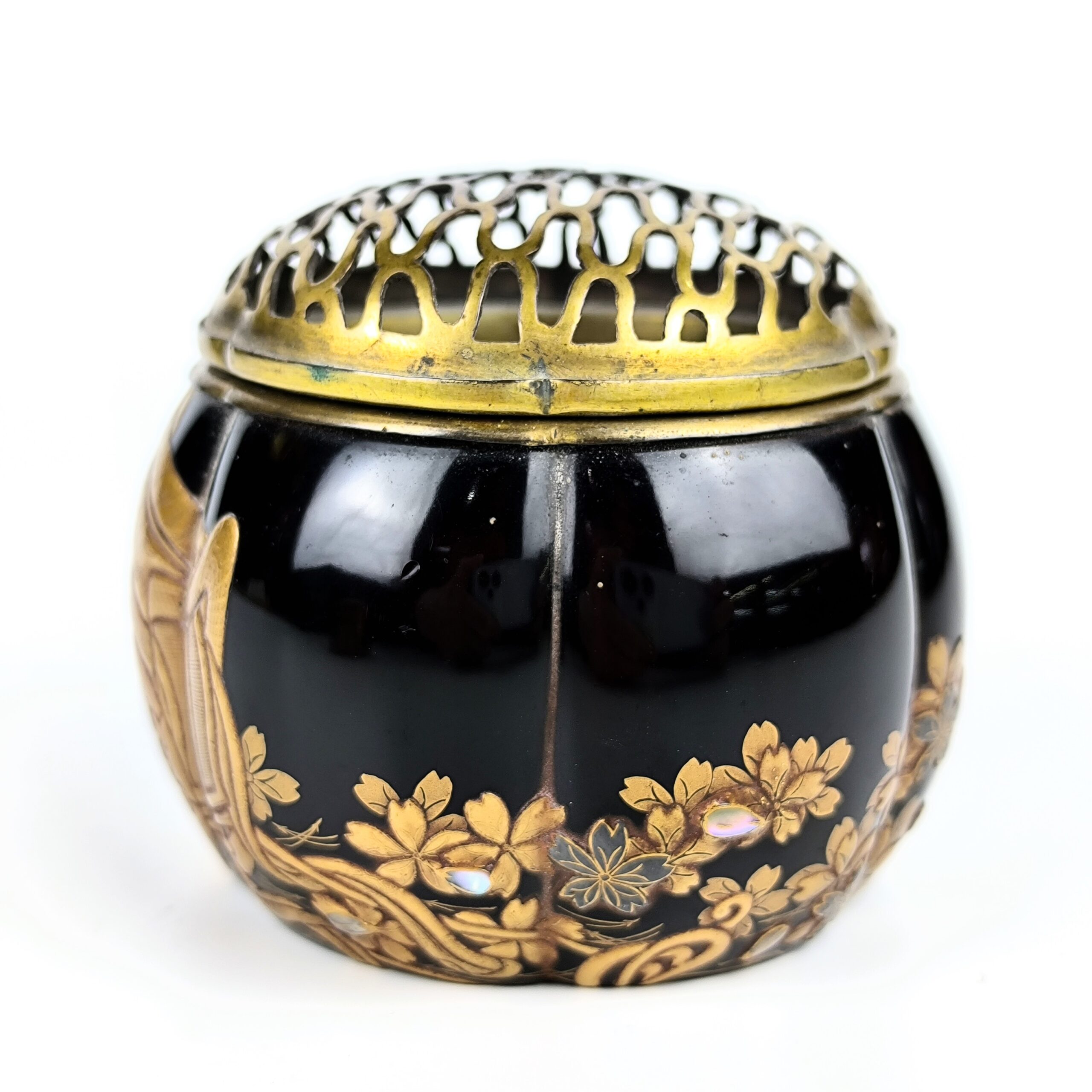
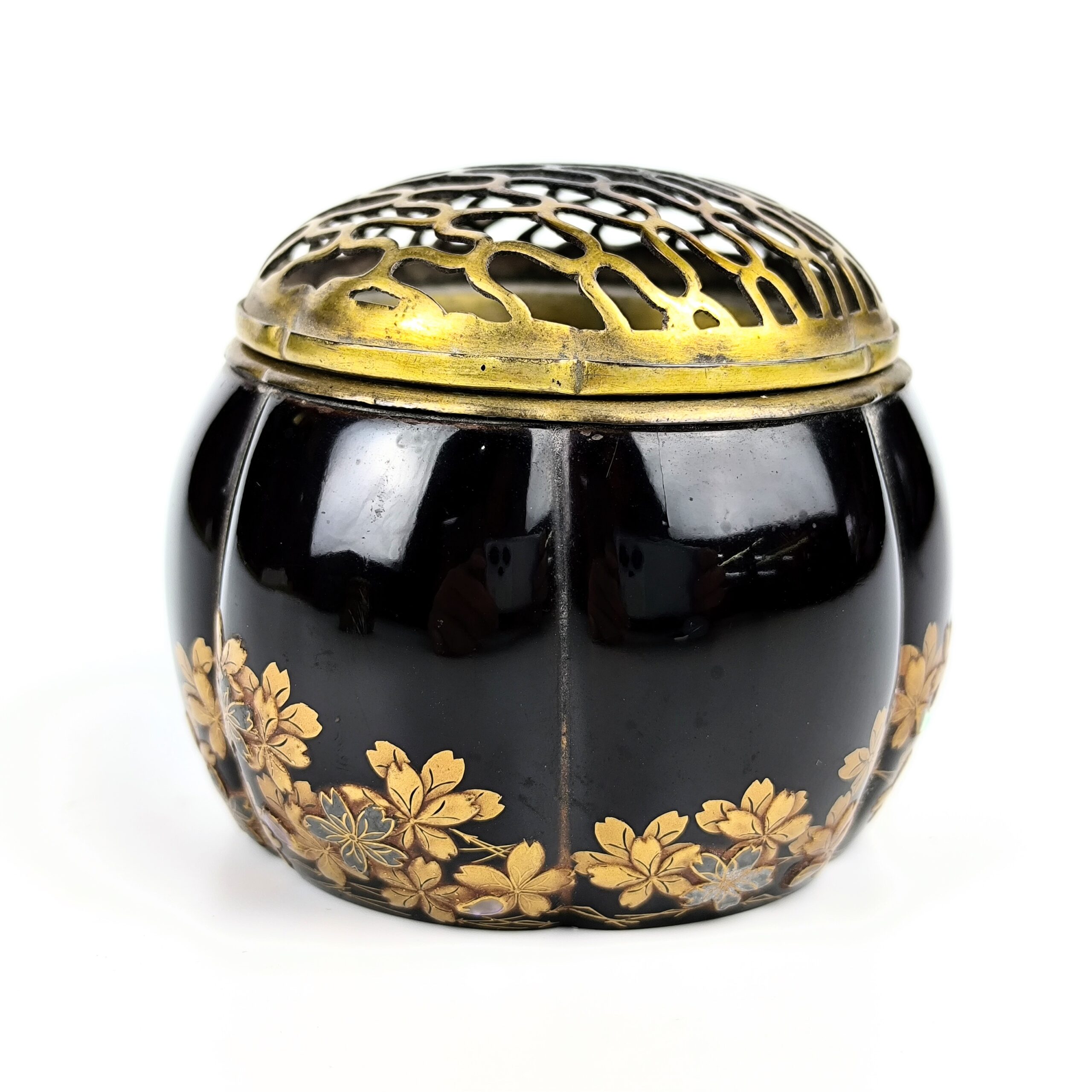
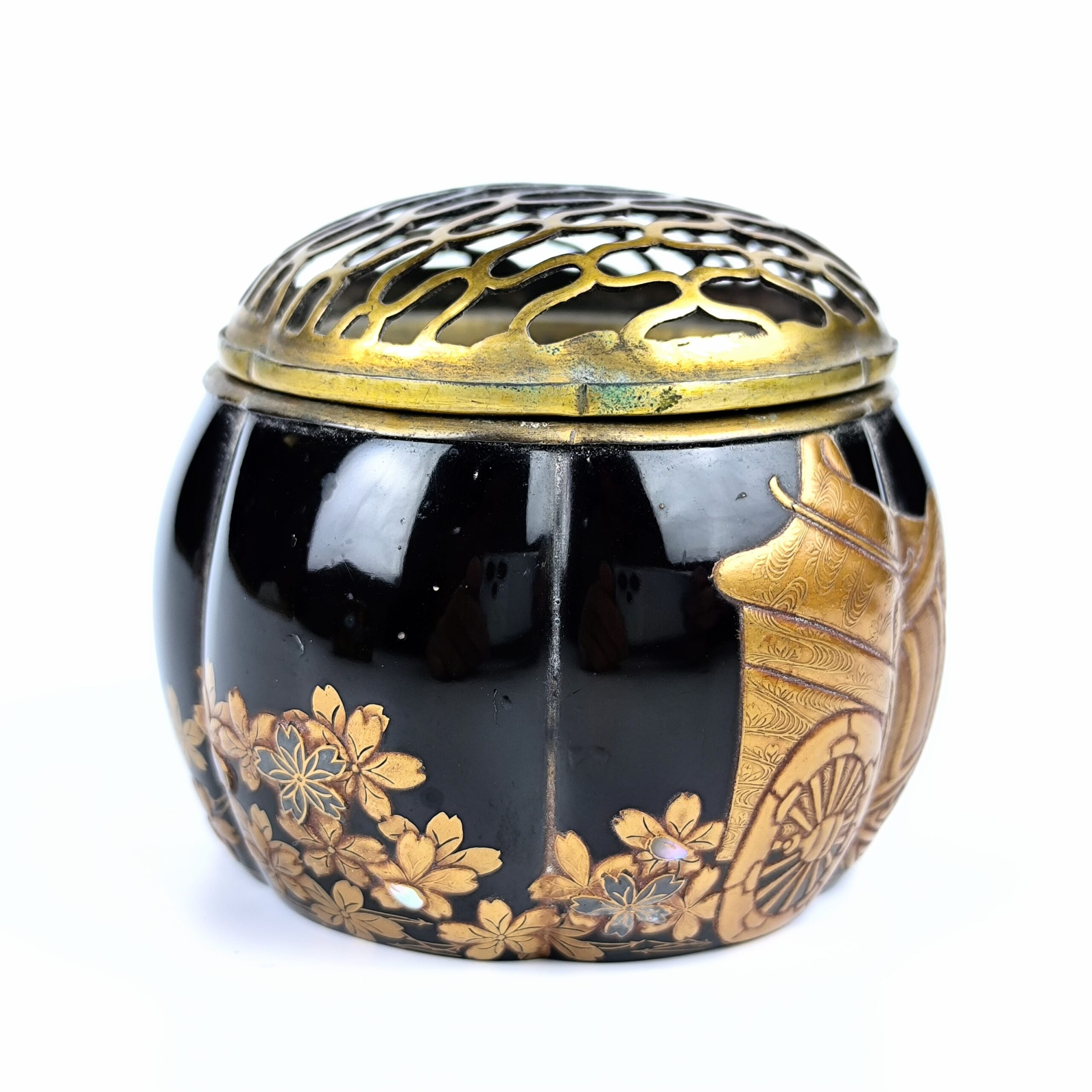
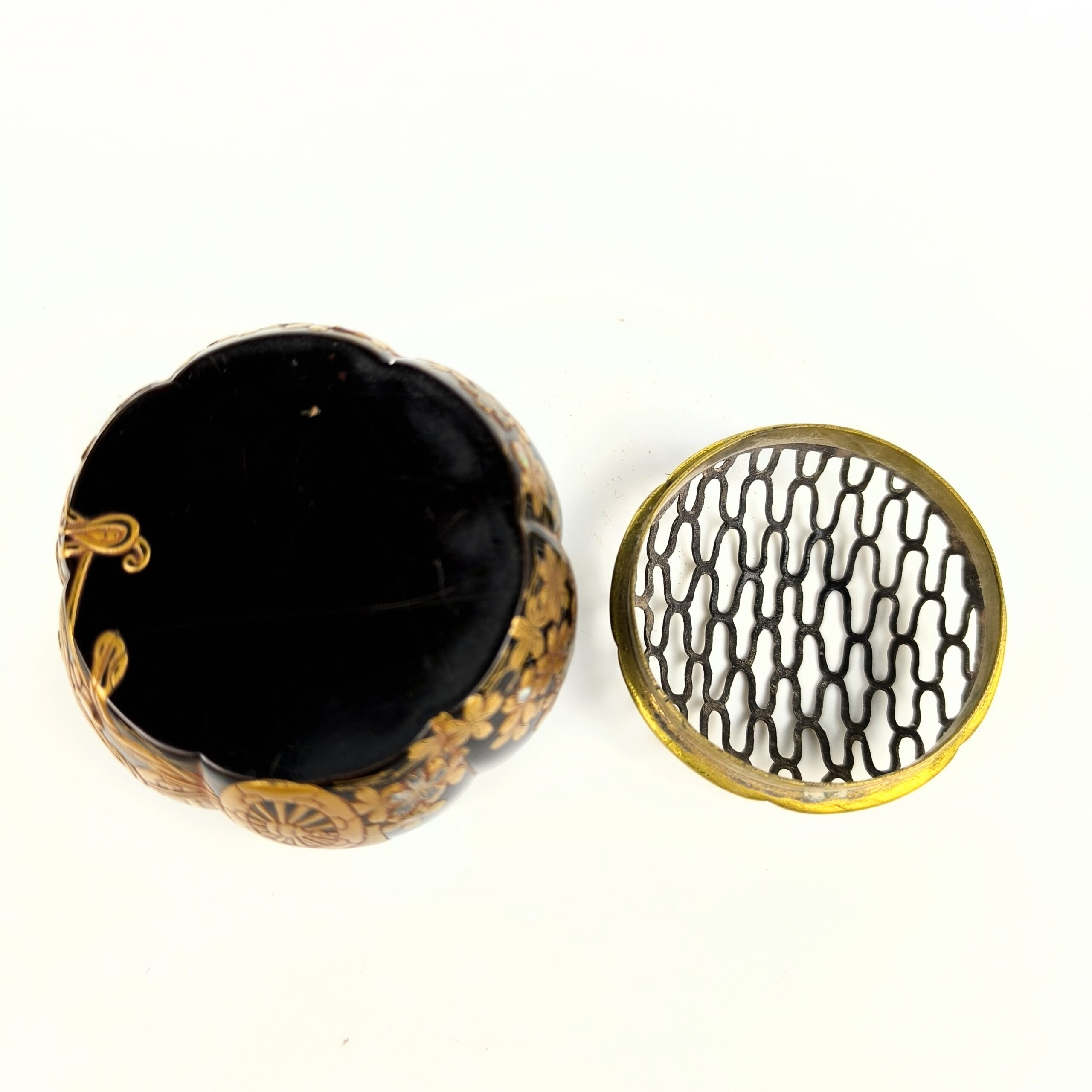
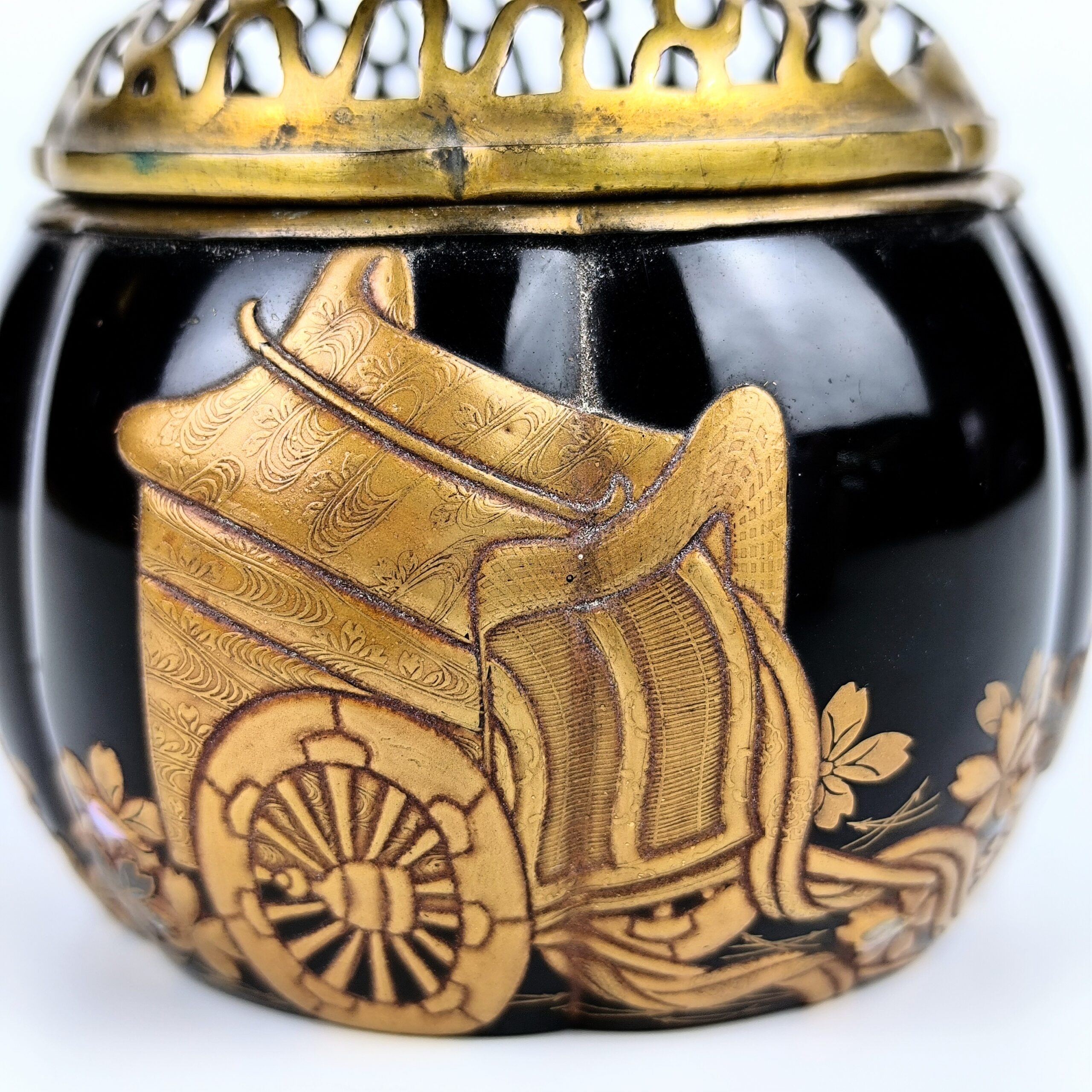
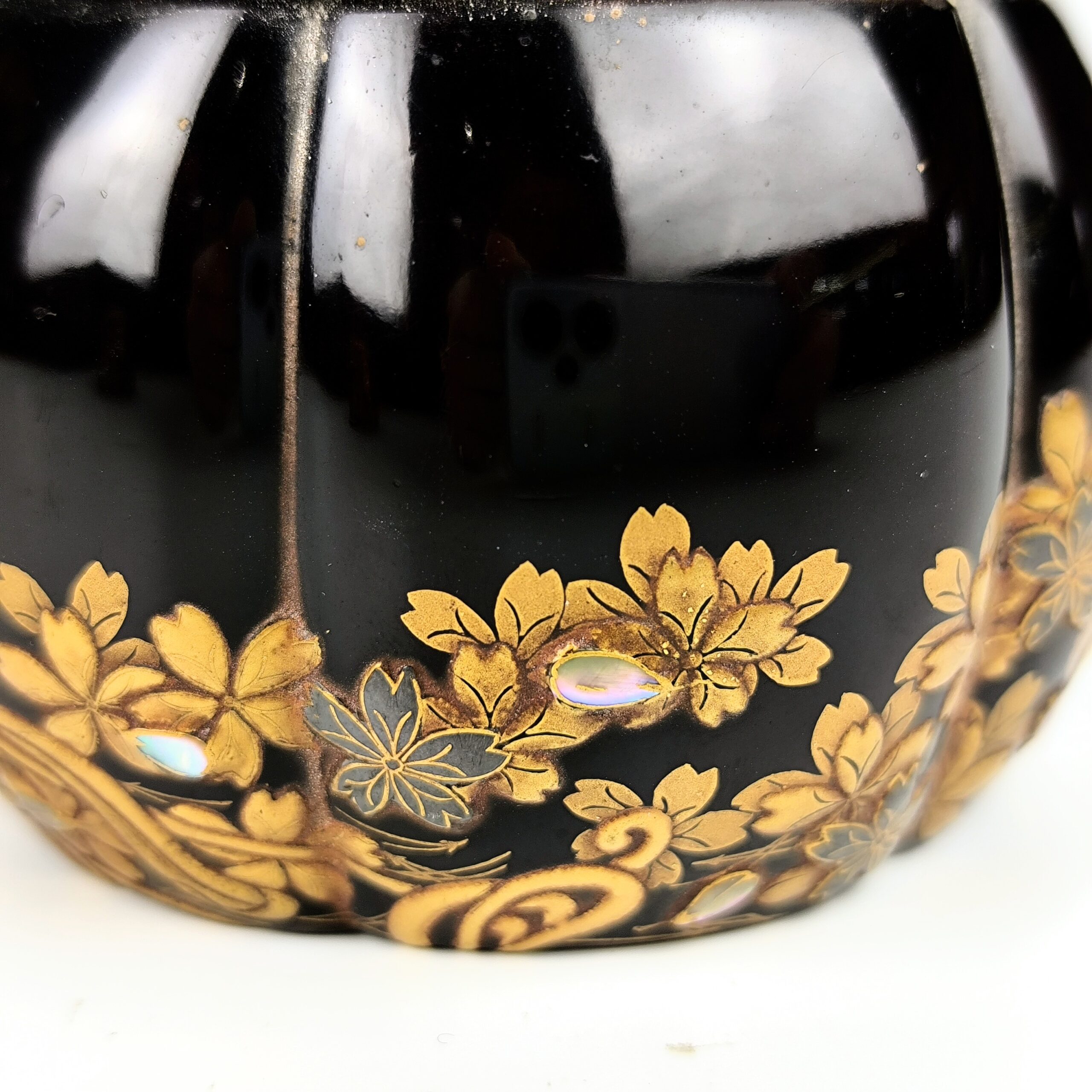
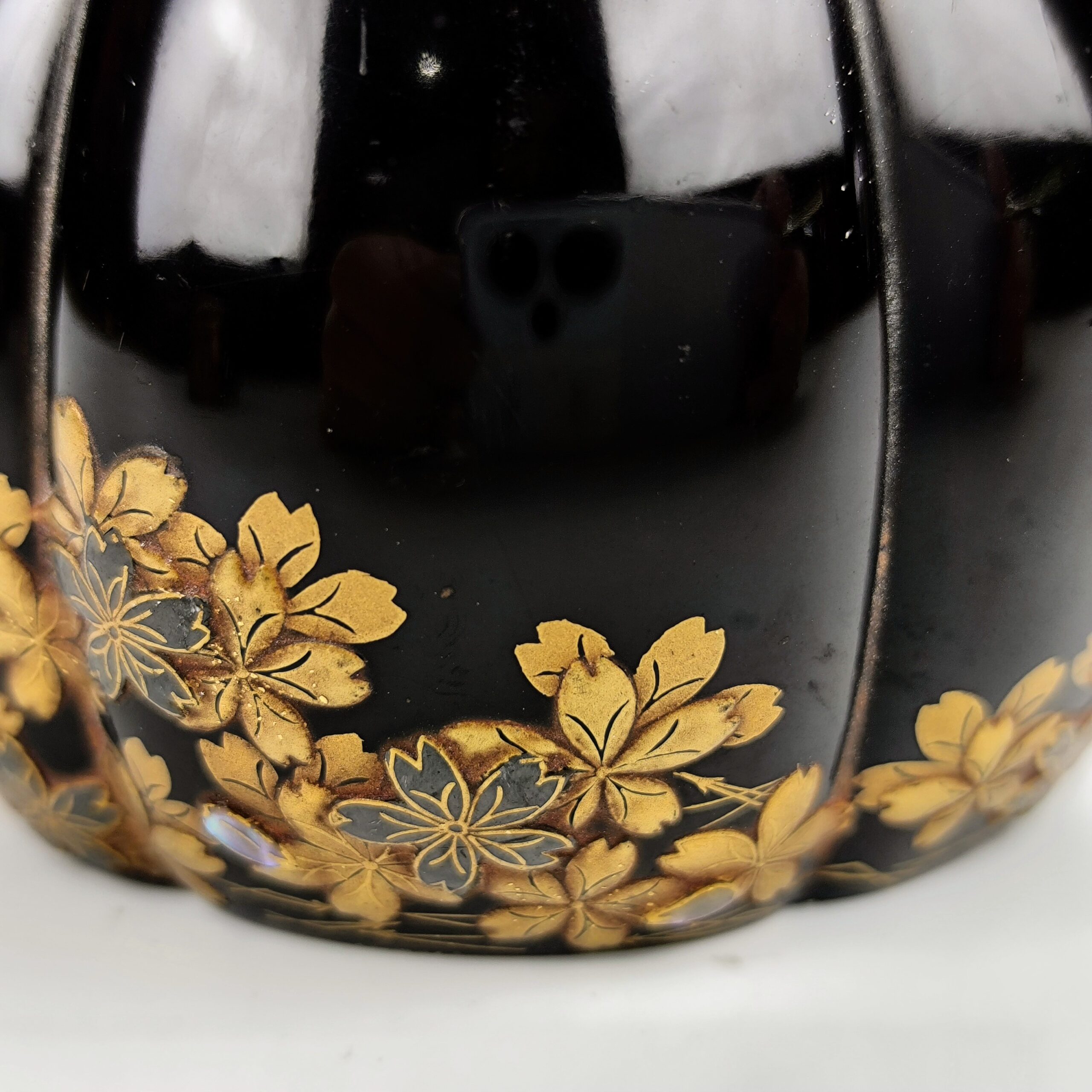
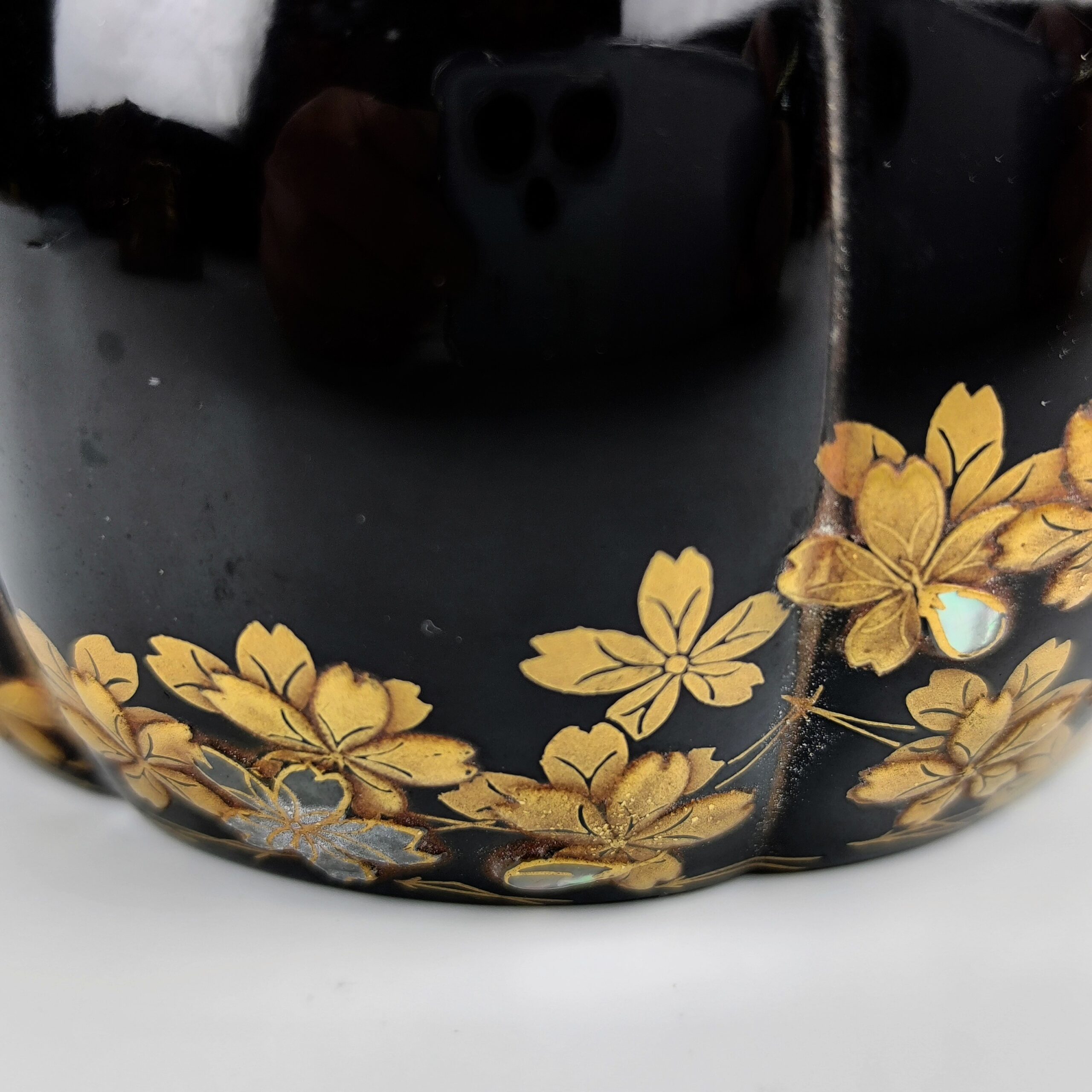
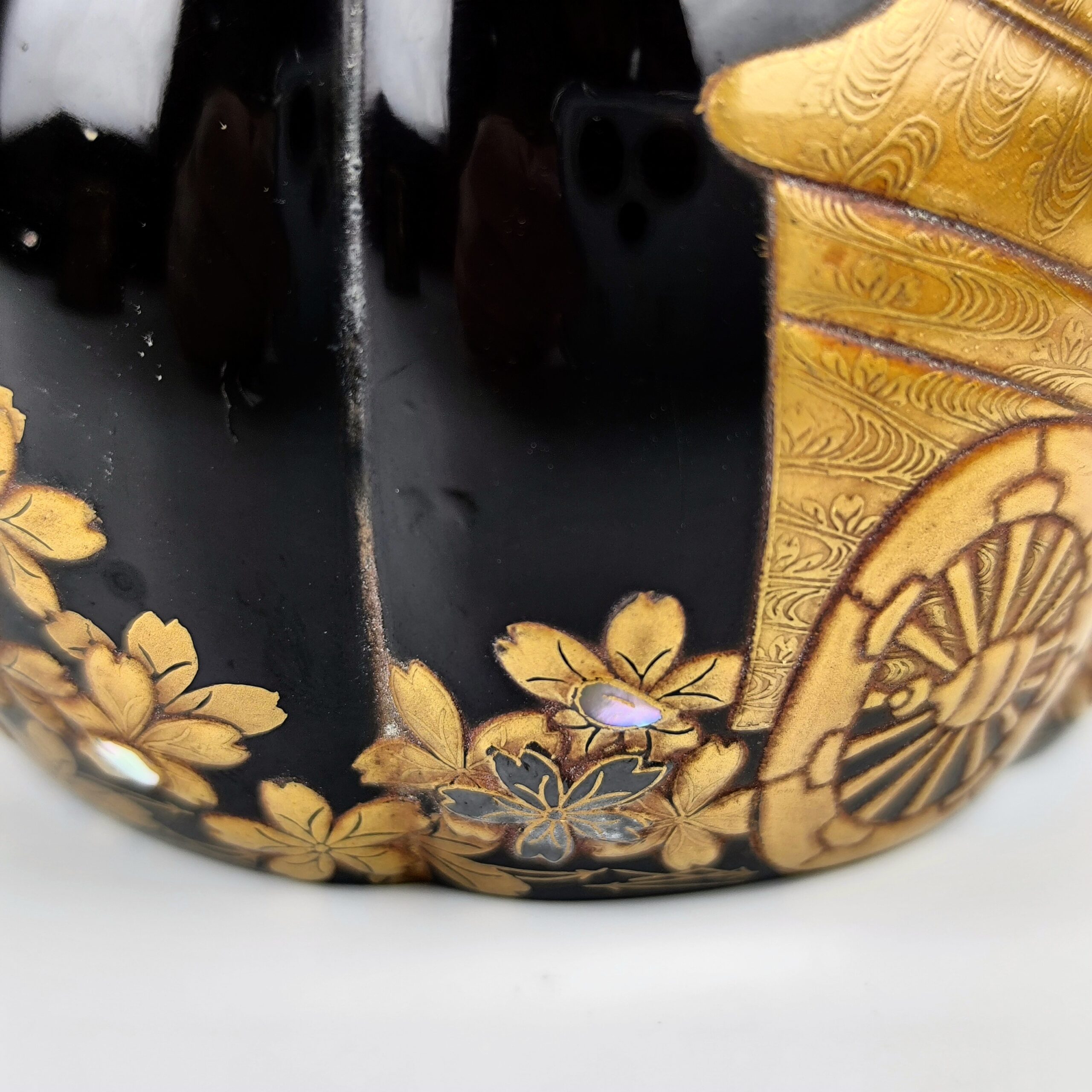
Makie is one of the representative decorative techniques in lacquerware craftsmanship. It is a traditional Japanese lacquer technique where patterns are drawn with lacquer, and before it dries, gold or silver powder (metallic powder) is “sprinkled” onto the surface to fix it, creating a brilliant decoration. It is called “makie” because it involves sprinkling powder to create designs, and its characteristic feature is the beautiful finish where gold and silver appear to float on the jet-black lacquered surface.
Raden (螺鈿) is a traditional Japanese lacquer craft technique where thin layers of the nacreous layer found inside shells such as abalone, night pearl shell, and white butterfly shell are processed. These layers are then inlaid or applied onto the surface of lacquerware to create patterns with a gem-like luster and color. Introduced from China during the Nara period, it developed uniquely in Japan from the Heian period onward. Combined with maki-e, it enabled more complex expressions.
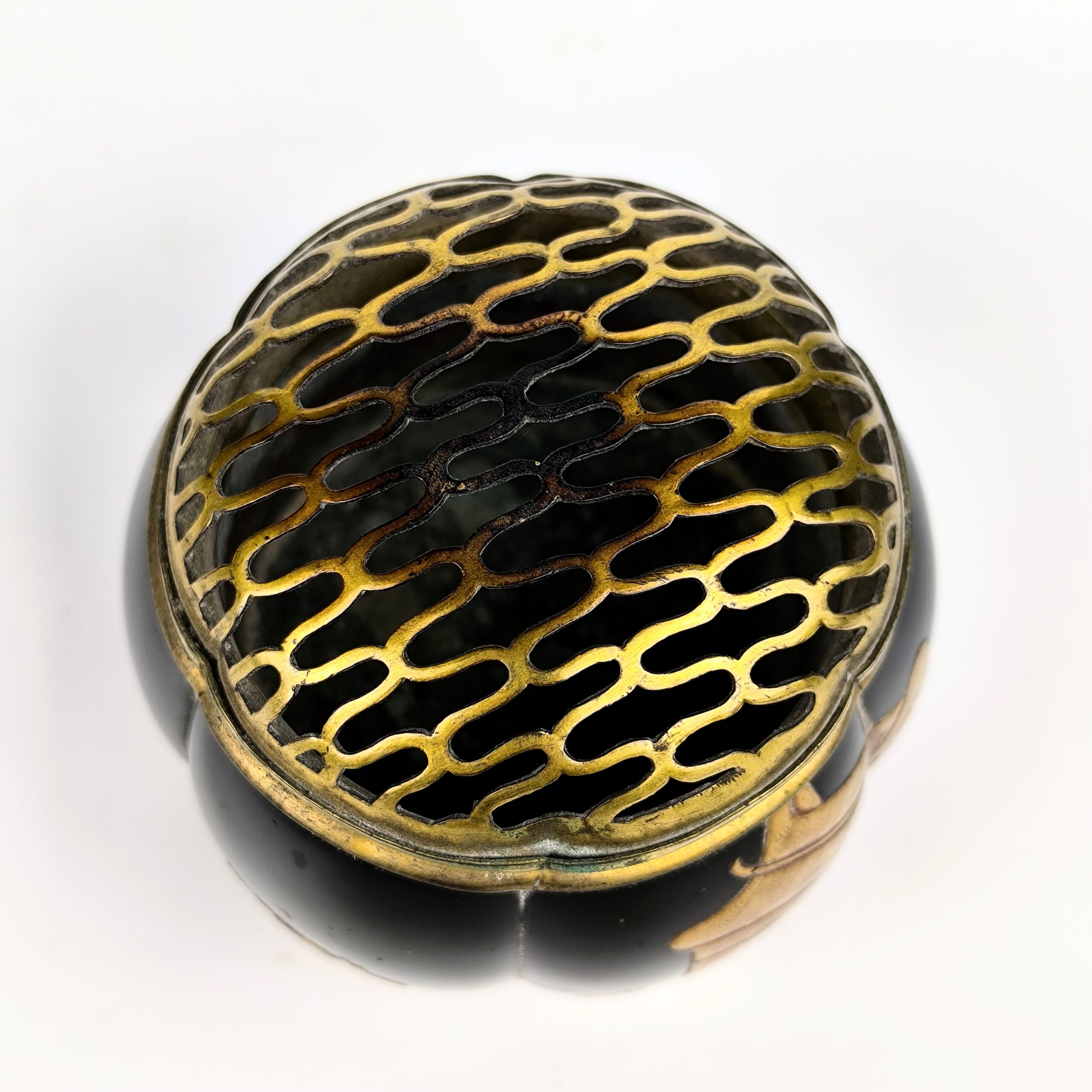
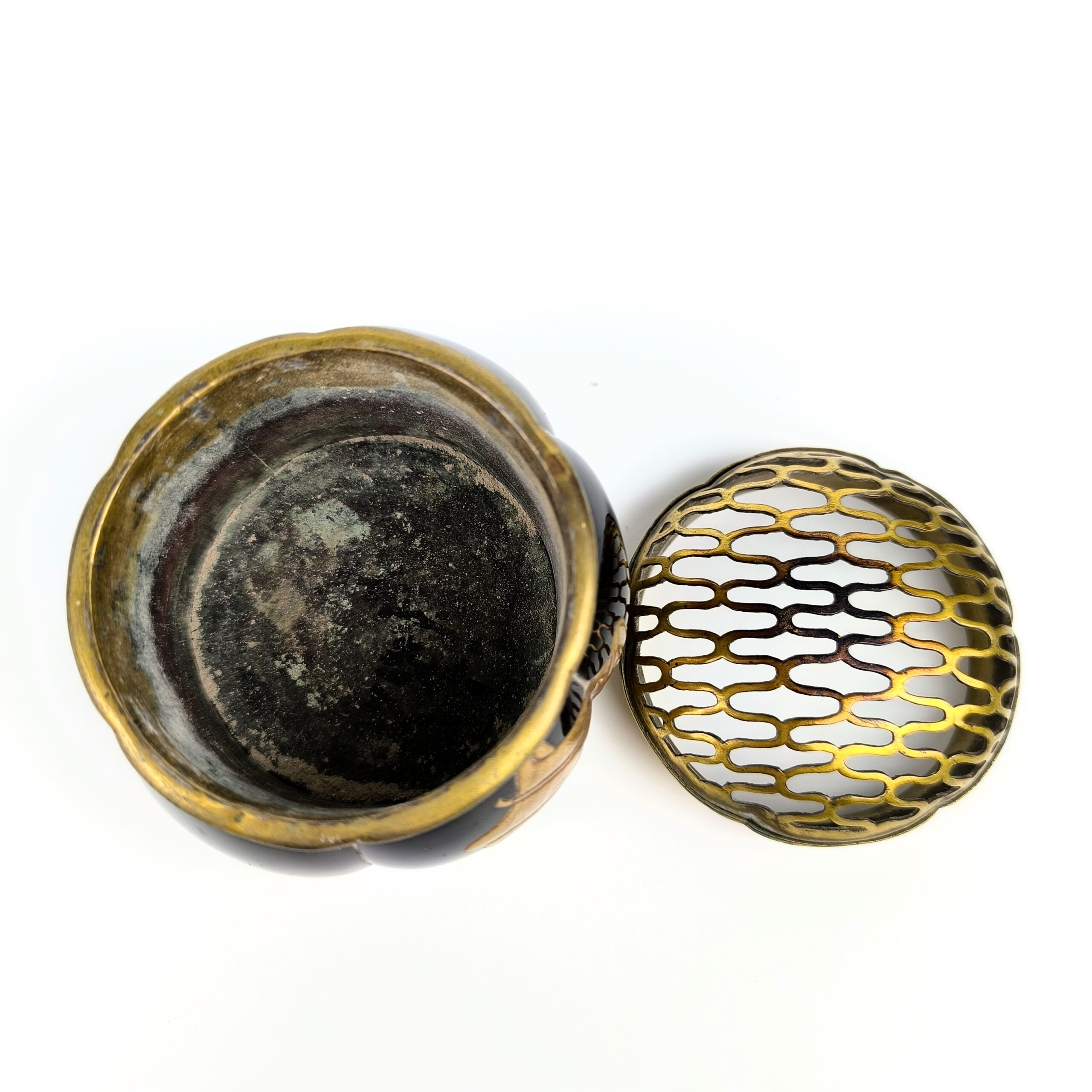
The Akoda incense burner is characterized by its six-petaled, constricted shape resembling an Akoda melon (a type of melon). Primarily used from the Heian period through the medieval era, it served as hitorigōro by which nobles would burn incense to perfume their clothing. Typically crafted from lacquered wood with maki-e (gold and silver powder decoration), it features a gold-bronze fire basket (hoya, net) with openwork latticework. This incense burner form is still used in kodo (the Way of Incense) today for carrying burning charcoal.