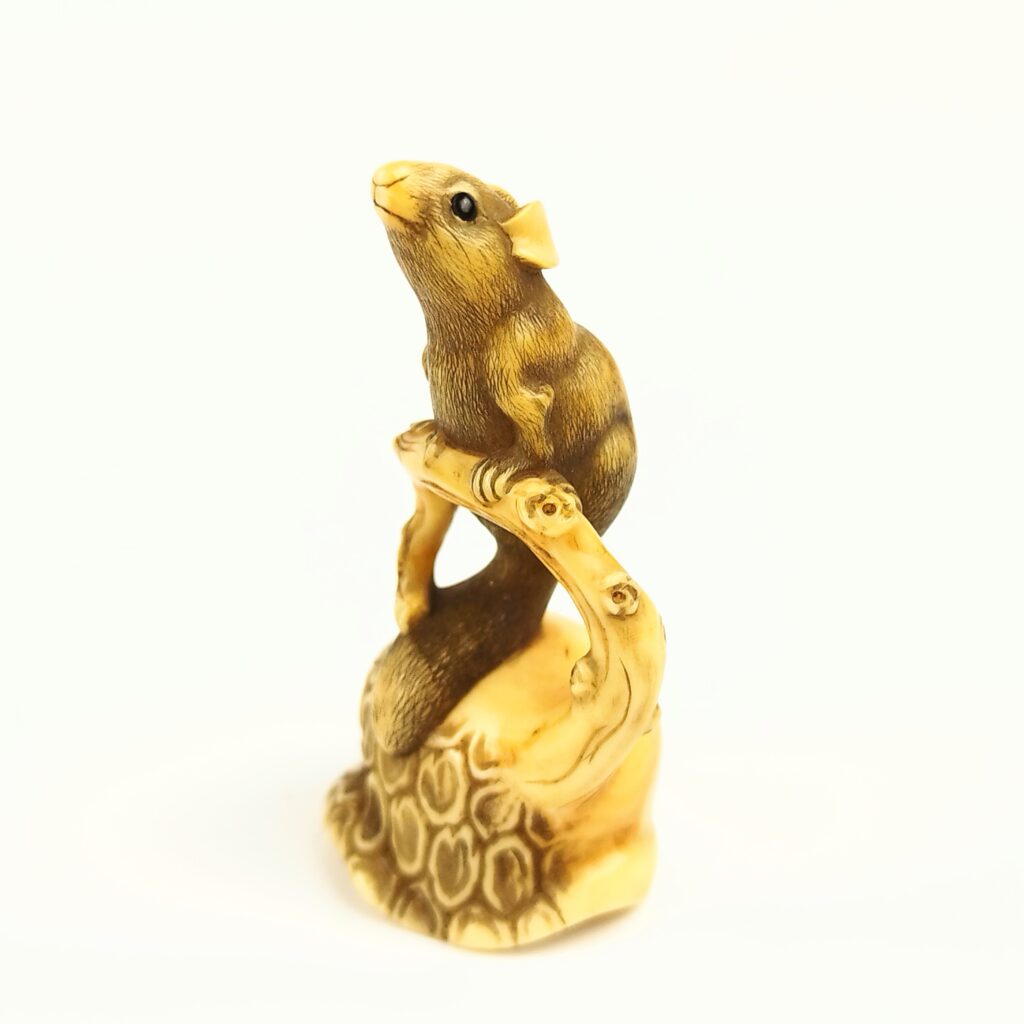
The world of antiques is home to small treasures that are astonishingly intricate and full of whimsy. These are known as “netsuke,” “inro,” and “ojime.” Primarily during the Edo period, these items evolved as “sagemono” (items hung from the obi), combining both practicality and decorative appeal. In this article, we will provide an easy-to-understand explanation—even for beginners—of the history, roles, materials, techniques, and everyday uses of netsuke, inro, and ojime, which enjoy immense popularity as antiques both in Japan and abroad. Let’s take a peek into this microcosm of art, distinct from other antiques such as Imari ware.
The Trinity of Carrying Accessories: The Relationship Between Inro, Netsuke, and Ojime
First, let’s understand the relationship between these three.
- The History of Netsuke: Inro, and O-jime: The Essence of Edo Condensed in the Palm of Your Hand
- Netsuke: An ornament attached to the end of a cord when hanging an inro or similar item from an obi, which hooks onto the obi to prevent it from slipping (acting as a fastener)
- Ojime: A small bead-like object that is threaded onto the cord connecting the inro and the netsuke; it is used to prevent the inro lid from opening and to adjust the position of the netsuke.
These items were typically connected by a single cord and used as a set. In an era when kimonos had no pockets, people used these pouches to carry their essentials.
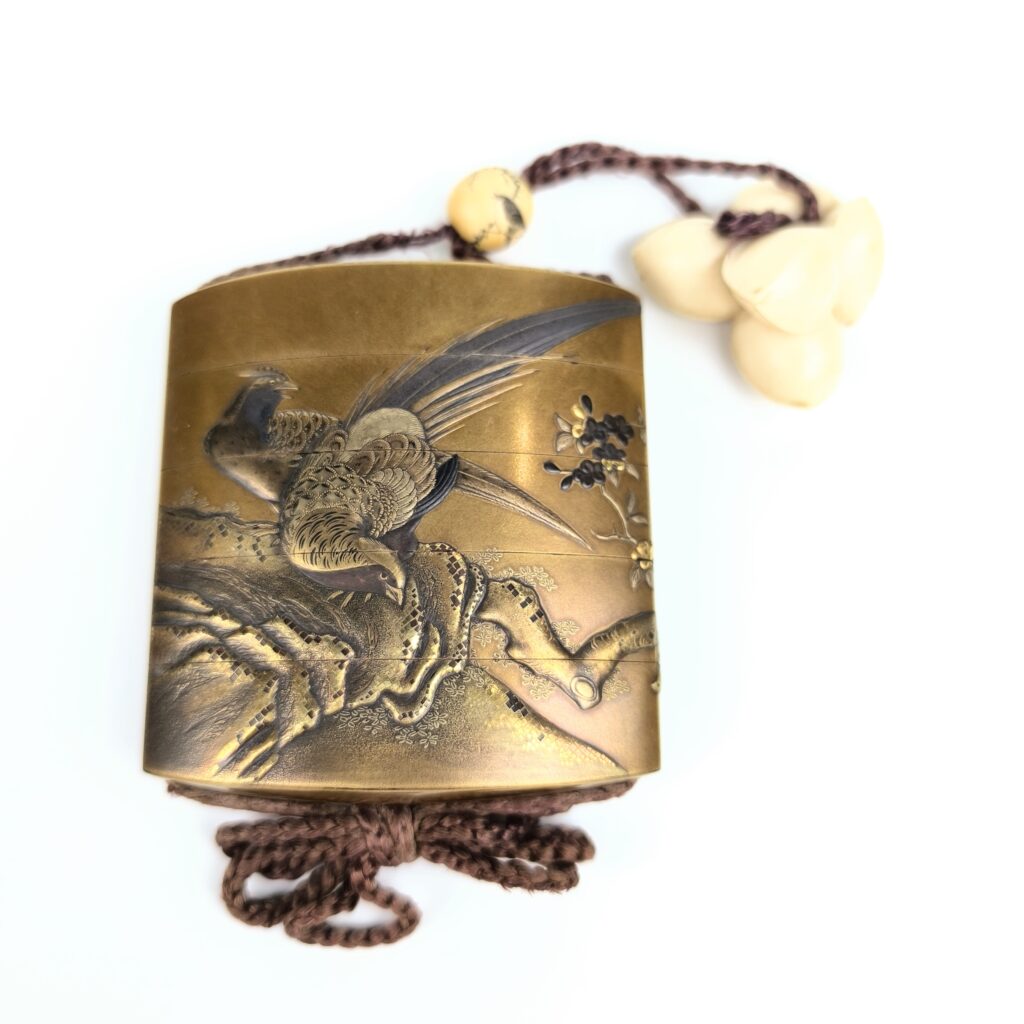
Inro – A portable case showcasing exquisite craftsmanship
History and Uses: The origins of the inro date back to ancient times; as its name suggests, it was originally used to hold a seal and seal pad. However, by the Edo period, it had become widely popular as a container for carrying medicine. Samurai and wealthy townspeople began competing to own inro with elaborate designs, not only as practical medicine cases but also as decorative items to display their status, wealth, and refined taste. The inro that survive today as antiques encapsulate the sophistication and aesthetic sensibilities of that era.
Structure: Typically, three to five small boxes are stacked tightly on top of one another and bound together with a cord that runs through the sides. Because each layer is meticulously crafted, the boxes are highly airtight, making them ideal for preserving the quality of the medicine.
Materials and Techniques: The most common material is lacquerware, and advanced lacquer techniques such as maki-e (gold and silver powder inlay) and raden (mother-of-pearl inlay) were used liberally. The pieces range from luxurious items lavishly adorned with gold and silver to those with a more austere, wabi-sabi aesthetic. Other materials include wood carvings, ivory, metal, and, rarely, ceramics (for example, while it is possible that inro made of porcelain, such as Imari ware, existed, they would be extremely rare); however, lacquerware remains the dominant form. The exquisite maki-e applied to these small surfaces can truly be said to represent the pinnacle of Japanese lacquer craftsmanship.
Netsuke – The Soul Embodied in a Tiny Sculpture
History and Function: Netsuke originated as fasteners used to secure items such as inro, tobacco pouches, and drawstring pouches to the obi sash. Attached to the end of a cord and slipped over the obi, they prevent these items from slipping off. Initially, simple wooden pieces or seashells were used, but from the mid-Edo period onward, as a period of peace continued and townspeople’s culture flourished, netsuke evolved from mere utilitarian objects into works of art imbued with sophisticated carving techniques. A wide variety of subjects were depicted with astonishing vitality and, at times, humor. As antiques, netsuke are highly popular among collectors overseas due to their exceptional artistic merit.
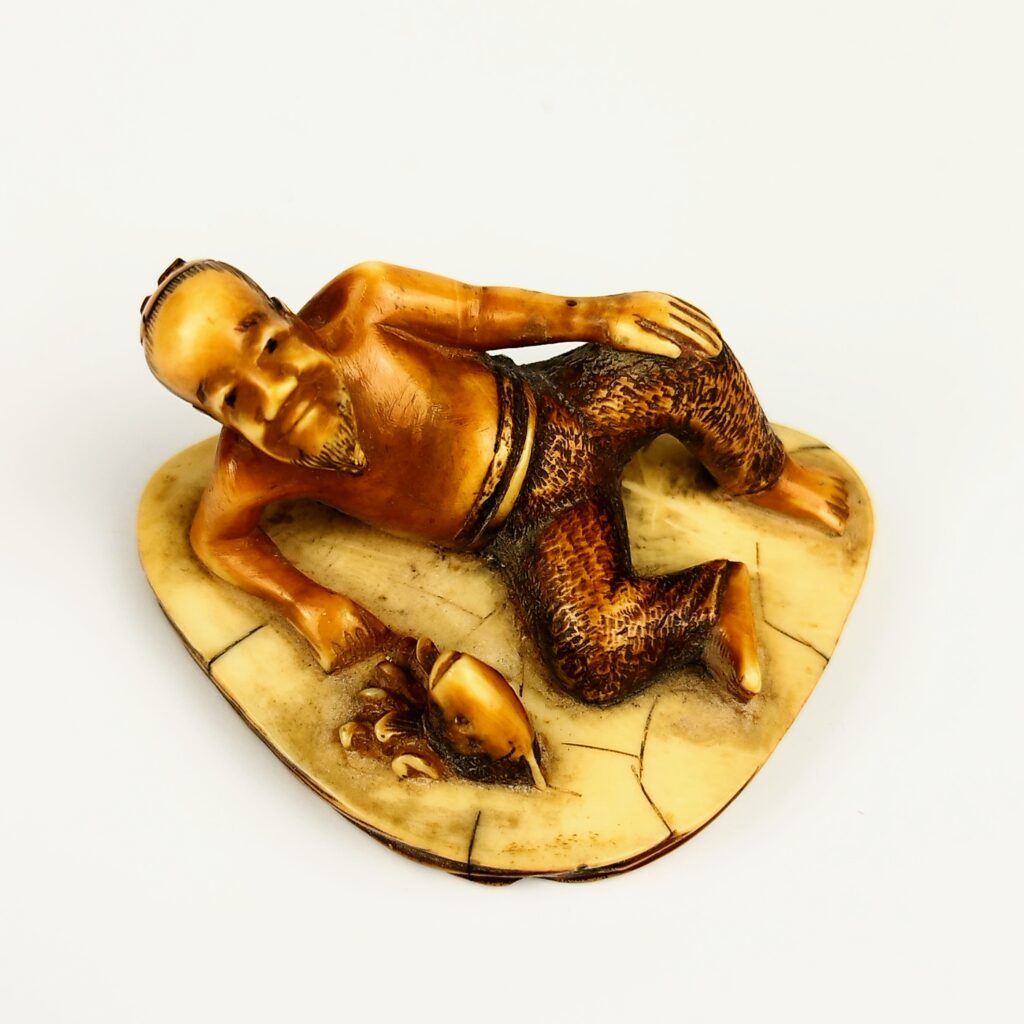
Materials: The materials used for netsuke are extremely diverse.
- Animal materials: ivory, narwhal tusk, deer antler, whale tooth, boar tusk, water buffalo horn, etc.
- Woods: boxwood, ebony, yew, cherry, persimmon, etc.
- Others: Metals (gold, silver, copper, iron, etc.), ceramics (including netsuke made in kilns such as Imari ware), glass, coral, agate, amber, bamboo, walnut, etc.
Shapes and Types: Netsuke come in a variety of shapes.
- Sculpted netsuke: Three-dimensional carvings depicting people, animals, deities and Buddhas, mythical creatures, scenes from stories, still lifes, and more. This is the most diverse category and the most representative form of netsuke.
- Manju netsuke: Literally, a netsuke shaped like a flat, round disc (manju-shaped). Its surface is decorated with carving, inlay, or lacquer work.
- Mirror-Lid Netsuke: A type of manju netsuke in which a recess is carved into the main body (typically made of ivory or wood), and a metal disc (lid) featuring metalwork or other decorations is fitted into it.
- Sashi-netsuke: A long, slender netsuke worn by slipping it between the obi and the body. Examples include designs modeled after tobacco pipes and arrow quivers.
- Men-tsuke: Small, intricately carved replicas of Noh masks, Kyogen masks, Gagaku masks, and Kagura masks. They are popular for their expressive faces.
Each of these netsuke is a unique antique with its own distinct character, making them a never-ending source of enjoyment for collectors.
Ojime – The functional beauty of a small accent
Function: The oshime is positioned in the middle of the cord connecting the inro and the netsuke. By sliding it up and down, it prevents the inro’s lid from opening accidentally and secures the netsuke in place. Although it is a small bead, about 1 to 2 cm in diameter, it served as an important accent for the entire ensemble.
Materials and Shapes: Like netsuke, the materials used are extremely diverse, including ivory, wood, metal, coral, glass, ceramics such as Imari ware, and precious stones such as agate and jade. The shapes are not limited to simple spheres; they include miniature carvings of animals, plants, and objects, as well as pieces featuring intricate techniques such as openwork carving and inlay. Despite their small size, they are crafted with great artistry. In antique sets, the inro and netsuke are often made to match in both material and design, and this sense of unity is one of their charms.
How They Were Used in Daily Life – Stylish Fashion Items of the Edo Period
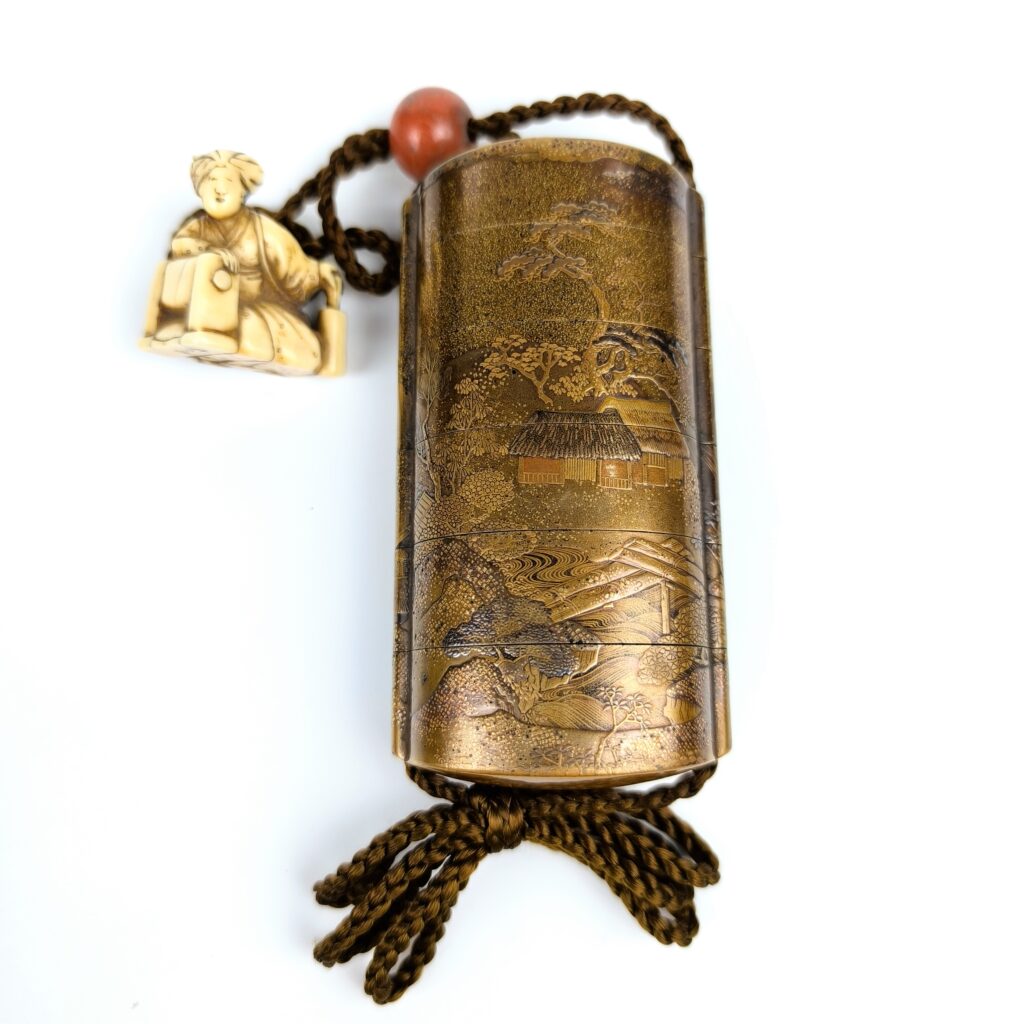
The inro, netsuke, and Ojime were connected by a cord; men would slip the netsuke between the folds of their obi and carry the inro and other items slung at their side. These were not merely tools for carrying items, but important fashion accessories that expressed the owner’s status, wealth, and, above all, aesthetic sensibilities such as “sui” (refined taste) and “sare” (chic style).
Samurai wore bags appropriate to their rank in public settings, while townspeople wore elaborately designed ones that reflected their financial means. It is said that kabuki actors, sumo wrestlers, and cultural figures also favored distinctive bags. The bags that have survived as antiques offer a glimpse into the lifestyles, fashions, and aesthetic sensibilities of people at that time.
The Connection Between Imari Ware and Sagemono
While lacquerware (inro) and wood carvings or ivory (netsuke) are the primary materials used for these small objects, Japan’s diverse craftsmanship is reflected even in this miniature world. For example, ceramics—including Imari ware—were sometimes used as materials for netsuke and cord fasteners. Porcelain netsuke and cord fasteners possess a hard, lustrous texture distinct from wood or ivory, as well as unique colors achieved through underglaze and overglaze painting, making them truly unique among antiques. Although they are not numerous, it is possible that some were produced in Imari kilns, suggesting the breadth of craftsmanship at the time. In this way, it might be interesting to seek out antiques made from materials that were not part of the mainstream.
Tips for Choosing Netsuke, Inro, and O-jime as Antiques
There are a few things to keep in mind when selecting these small antiques.
- For Beginners: First, check to see if the inro, netsuke, and cord stopper come as a complete set (though they can sometimes be purchased individually). Next, consider the condition. Carefully inspect the inro for chipped or cracked lacquer, the netsuke for chips or wear, and the cord stopper for scratches, as well as the condition of the cord. You may also want to choose based on the intricacy of the carving or maki-e, or the uniqueness of the design.
- Once you’ve gotten the hang of it, key evaluation points include whether the piece bears a maker’s mark or the artist’s name, the approximate period it was created, the quality and rarity of the materials (especially high-quality ivory or rare woods), and the originality of the design. Works by famous netsuke or maki-e artists command high prices.
Netsuke and inro are particularly popular among antiques, but unfortunately, there are also highly sophisticated forgeries and imitations. It is important to choose a reputable antique dealer or online shop and consult with an expert to ensure you select a piece you are fully satisfied with.
Summary: A Microcosm in the Palm of Your Hand: Savoring the Aesthetics of Edo
Netsuke, inro, and ojime are not only practical tools but also true “miniature universes in the palm of your hand,” representing a magnificent fusion of Japanese artisans’ extraordinary craftsmanship, rich imagination, and playful spirit. Each piece tells its own story and vividly reflects the daily lives, culture, and aesthetic sensibilities of people in the Edo period.
Exploring netsuke, inro, and ojime as antiques offers a wonderful opportunity to experience the world of intricate craftsmanship and the refined culture of the Edo period—a world quite distinct from that of Imari ware or hanging scrolls. We invite you to discover the profound charm of these tiny treasures. They are sure to add a new touch of color to your collection or bring a little joy to your daily life.